CADDEN / SERVICE RECORDS
A collection with
a clear reading purpose.
CADDEN presents a caddy, a housekeeping trolley and a brush collection as three independent service-tool records. Its gallery unfolds into a photographic discussion ribbon containing only the chosen identities, in the same order as the local list. Each record keeps its own issue and source state. This is a proposed-kit conversation, not an approved supply set or cleaning sequence. Six chapters cover tool identity, proposed kit scope, specimen correspondence, packing questions, changes and handoff. The fictional brand and original AI appearance concepts demonstrate an editorial structure. Actual materials, supplied contents, suitability, care requirements, safety and commercial scope need responsible provider information. A beautiful object presentation does not replace that information.
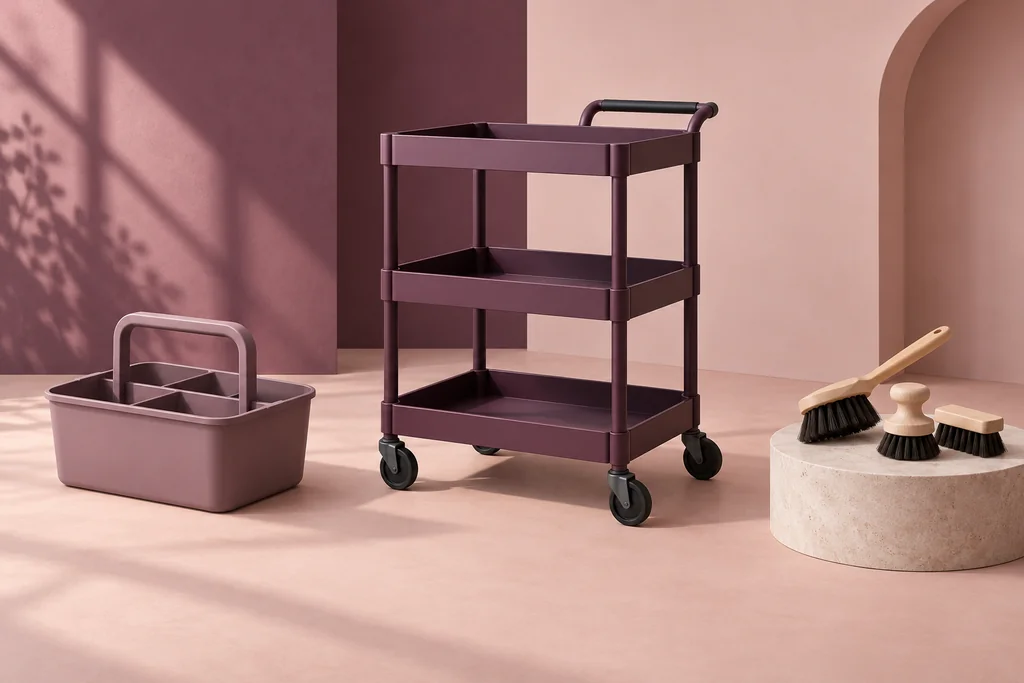
Keep each service tool independently named
Name each actual service tool before discussing a kit. A caddy, trolley and group of brushes have different represented scopes, even if a buyer wishes to discuss them together. Record the proposed contents separately from what is pictured, and keep sample correspondence with its actual physical label. Ask which current source covers each identity, then name any packing question as a proposal rather than a confirmed configuration. The discussion ribbon preserves one to three chosen records and their order. It does not count quantities or establish a ready-to-supply kit. When an issue changes, reopen its own source correspondence and retain the previous reference. Carry the remaining questions to a responsible provider through the real process.
What belongs in the actual company record
A real provider should supply its legal identity, relevant product and service scope, current sources and contact details. Those facts are not established by this fictional brand. The collection demonstrates an information structure; it supplies no real customer, facility, certification, project achievement or commercial promise.
Read the procurement approach