GRIDLINE / UNIT LOAD
A collection with
a clear reading purpose.
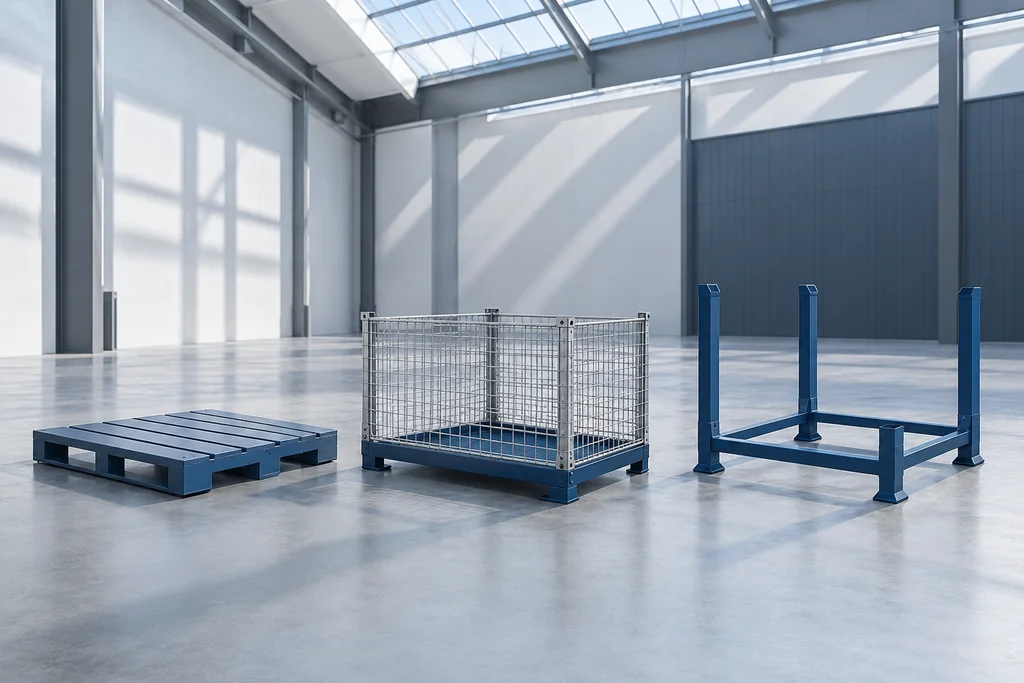
GRIDLINE is a fictional collection built around the identity of a unit-load carrier. A pallet base, mesh crate and open frame have different visible forms and different source questions. The collection starts with an appearance, then follows the relationship between the actual proposed item, its footprint record, support context and current issue. A visual resemblance does not establish a standard size, lifting interface or compatible handling arrangement. The footprint room changes the way the original abstract illustration is read while preserving each item’s name and source state. It helps a sourcing conversation locate missing references. It does not calculate a load, approve a carrier or describe a safe handling method. Actual dimensions, capacities, supplied configuration and operating requirements must come from the responsible provider and applicable reviewers.
From outline to current carrier source
Begin with the actual carrier identity and the intended subject of the conversation. Ask which drawing identifies its footprint and which issue belongs to the proposed item. Separate the visible outline from the support and handling relationships that require their own current sources. A pallet, crate and open frame can be shortlisted together without being interchangeable. Record whether the question concerns a physical sample, a drawing reference or a changed scope. When the proposed issue changes, reopen the affected correspondence instead of retaining a local source note as approval. The room lets a buyer keep one to three identities in a discussion order and prepare unanswered questions. Take the blank worksheets to the actual provider. A plan illustration here is an information view, not a dimensional drawing or warehouse layout.
What belongs in the actual company record
A real provider should supply its legal identity, relevant product and service scope, current sources and contact details. Those facts are not established by this fictional brand. The collection demonstrates an information structure; it supplies no real customer, facility, certification, project achievement or commercial promise.
Read the procurement approach