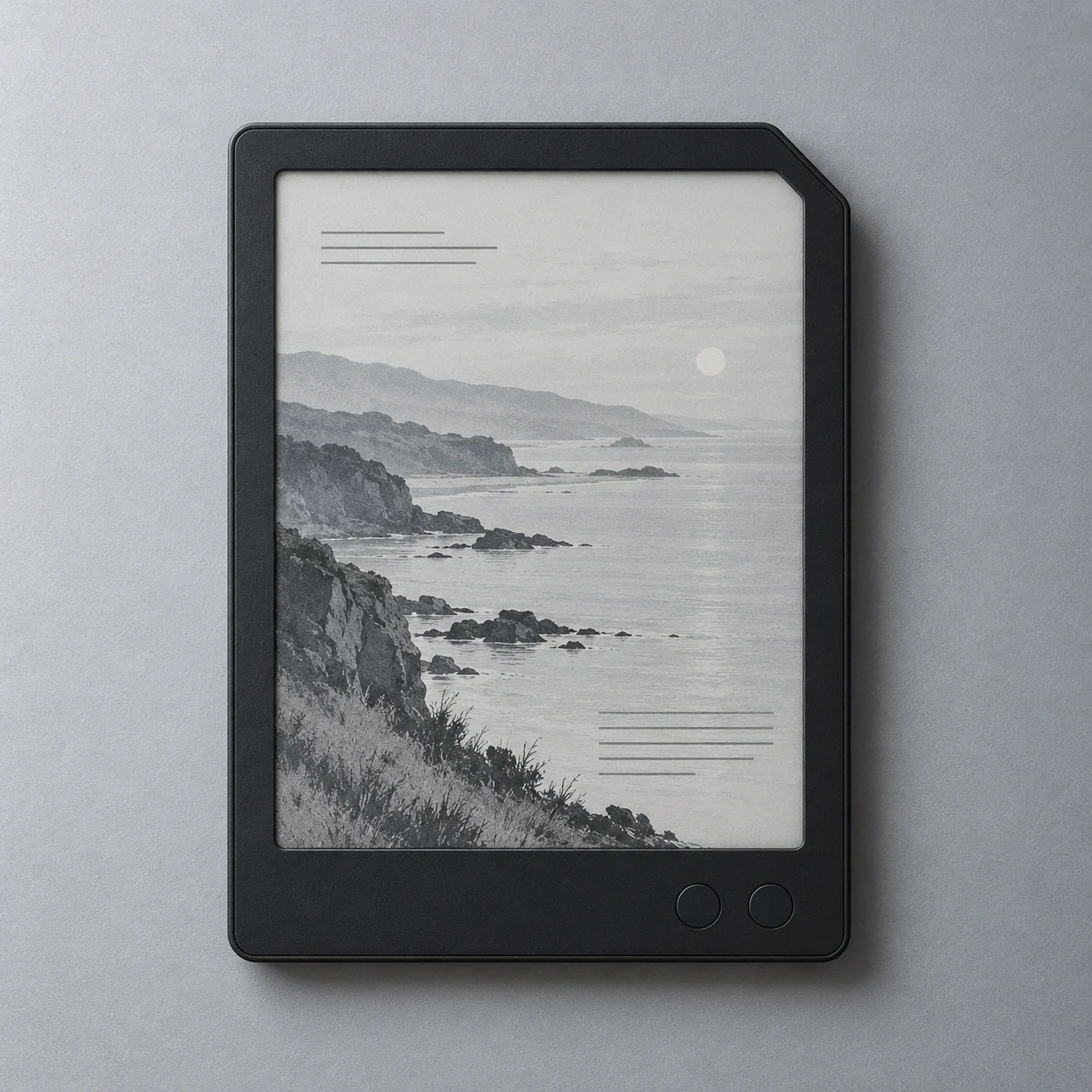
Drift 6
The pocket chapter. Reflowable reading is the starting task.
MARGIN / Reading instruments / Study 02
More room for a page.
Less noise around the decision.
Three original e-paper concepts. One considered comparison, shaped around the way you read.
Enter the comparison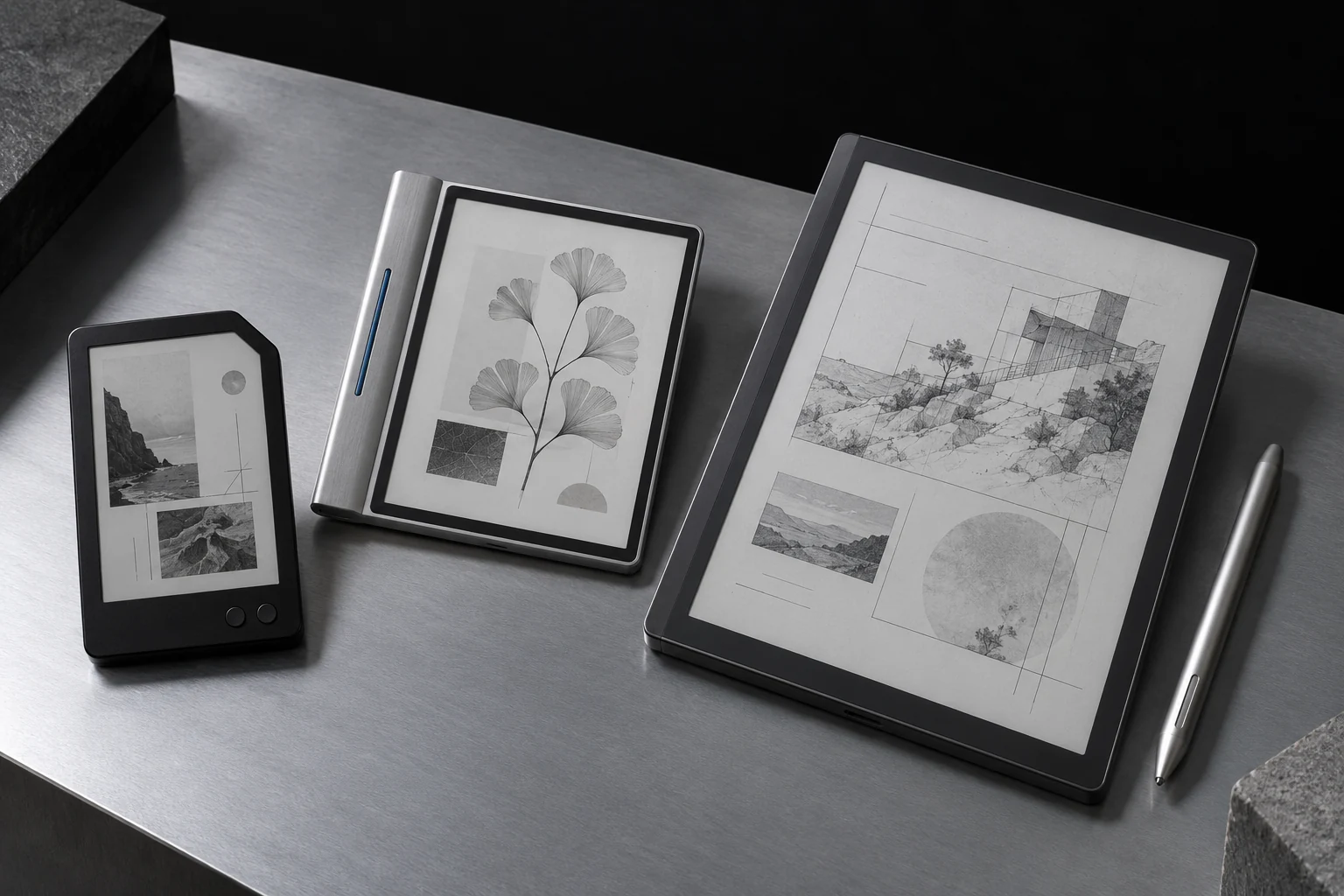
01 / The instrument collection
Start with the task, then look at the object. Each dossier records a design intention, a tradeoff and questions a physical sample still needs to answer.
The pocket chapter. Reflowable reading is the starting task.
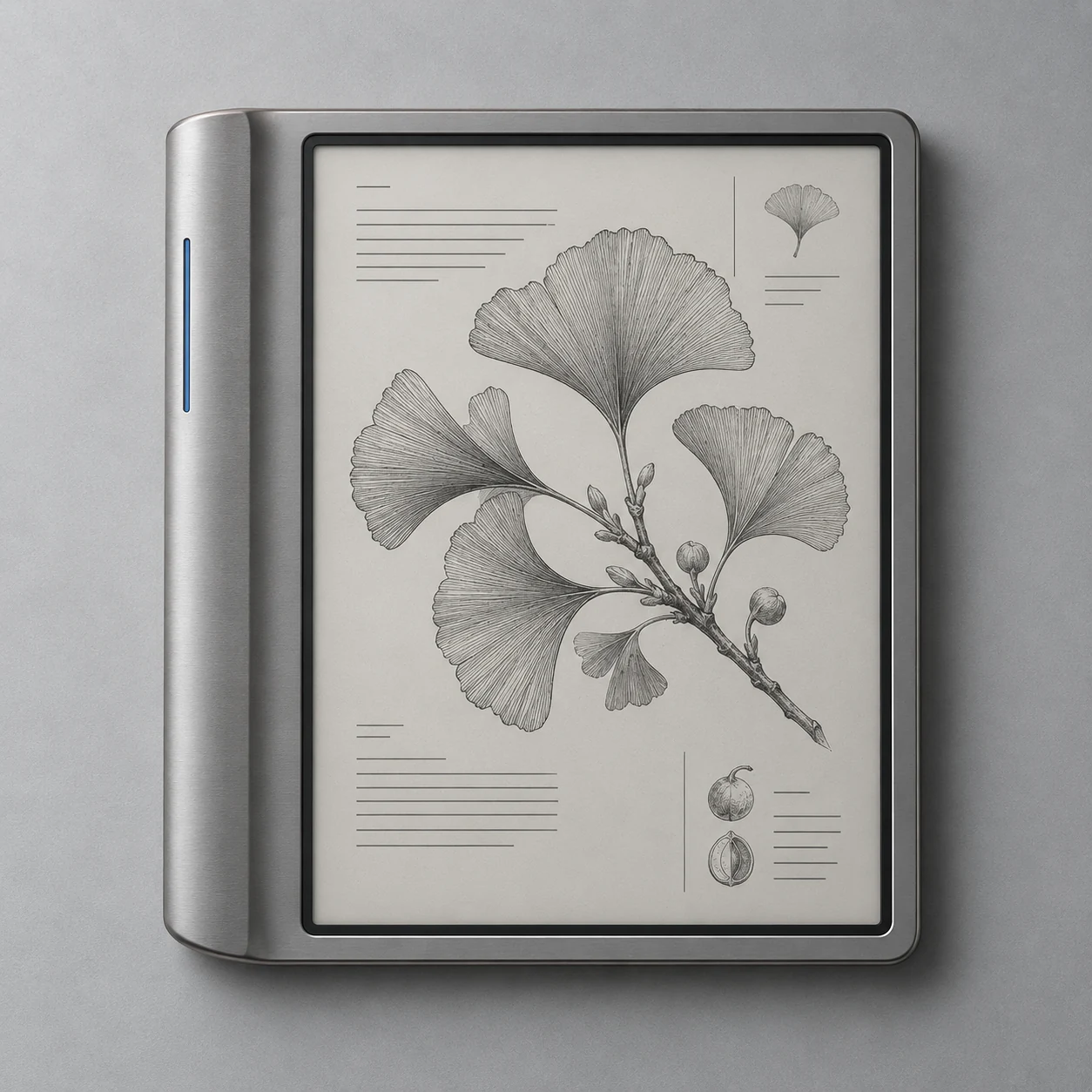
Room for the margin. Reading with references is the starting task.
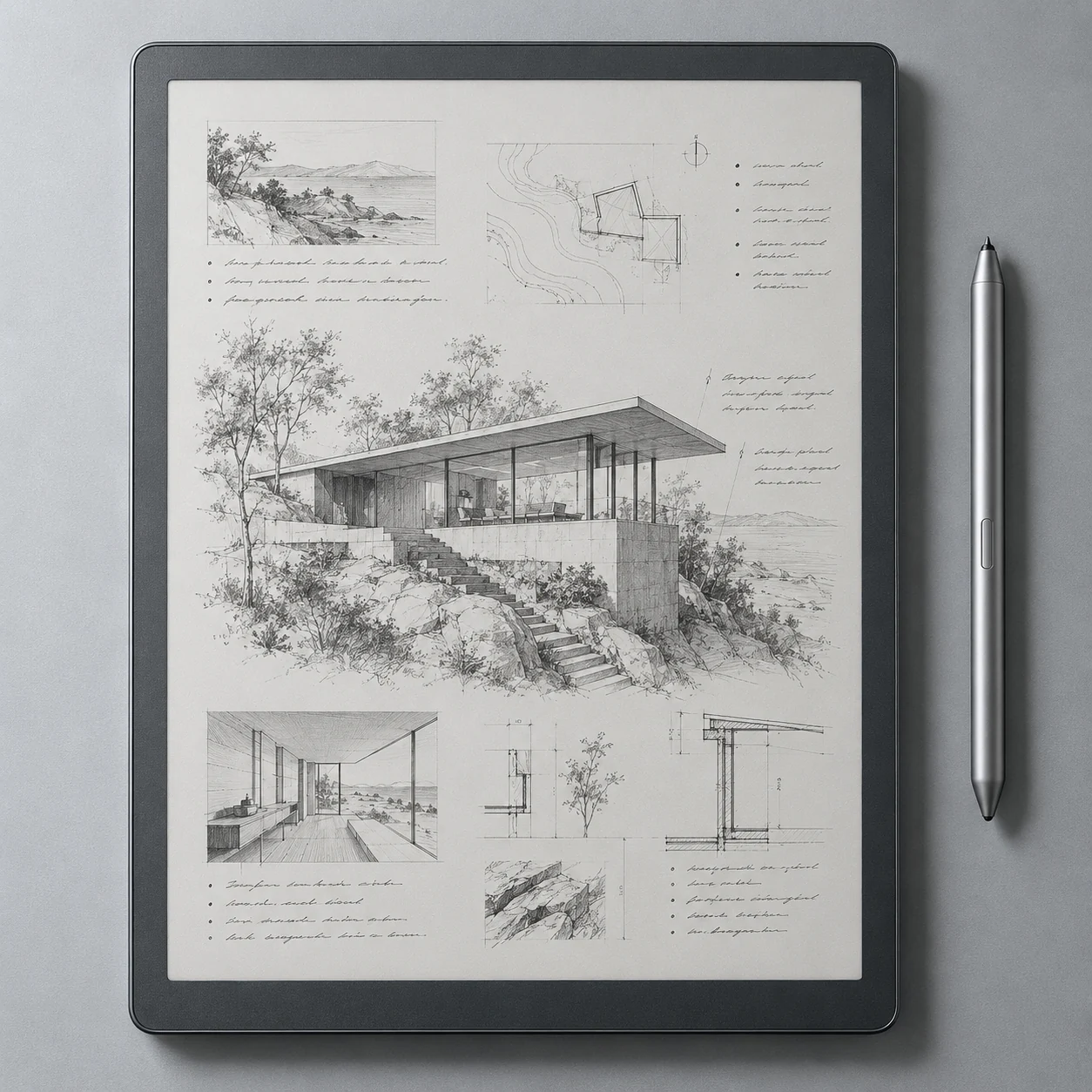
A document, opened. Documents and hand notes is the starting task.
Fictional instruments. All sizes and features are illustrative concept values, awaiting sample verification.
02 / A common baseline
Choose two or three devices. Align their concept silhouettes, then bring the important rows forward: carry, documents or marks. Motion explains the change in order; the facts stay in a readable table.
Compare the collection03 / A field guide, not a verdict
A screen diagonal cannot tell you how a linked PDF, a footnote or an exported mark will behave. Use a representative file set and keep untested behavior visible.
Screen size is a useful starting point. Layout, contrast, light and the original file decide what a reading surface can actually hold.
02 / SequenceReading flow includes the moments between pages: a return from a footnote, a change of text size, a restart and the next session.
03 / MarksA highlight, a typed note and a drawn line are different records. Start with the source relationship, then examine the export.
04 / SourcesA useful library trial begins with a small representative set. File extensions alone do not describe navigation, fonts or document rights.
From comparison to questions
The brief includes the selected instruments and unresolved questions. It is generated locally, marked NOT SENT, and makes no purchase recommendation.