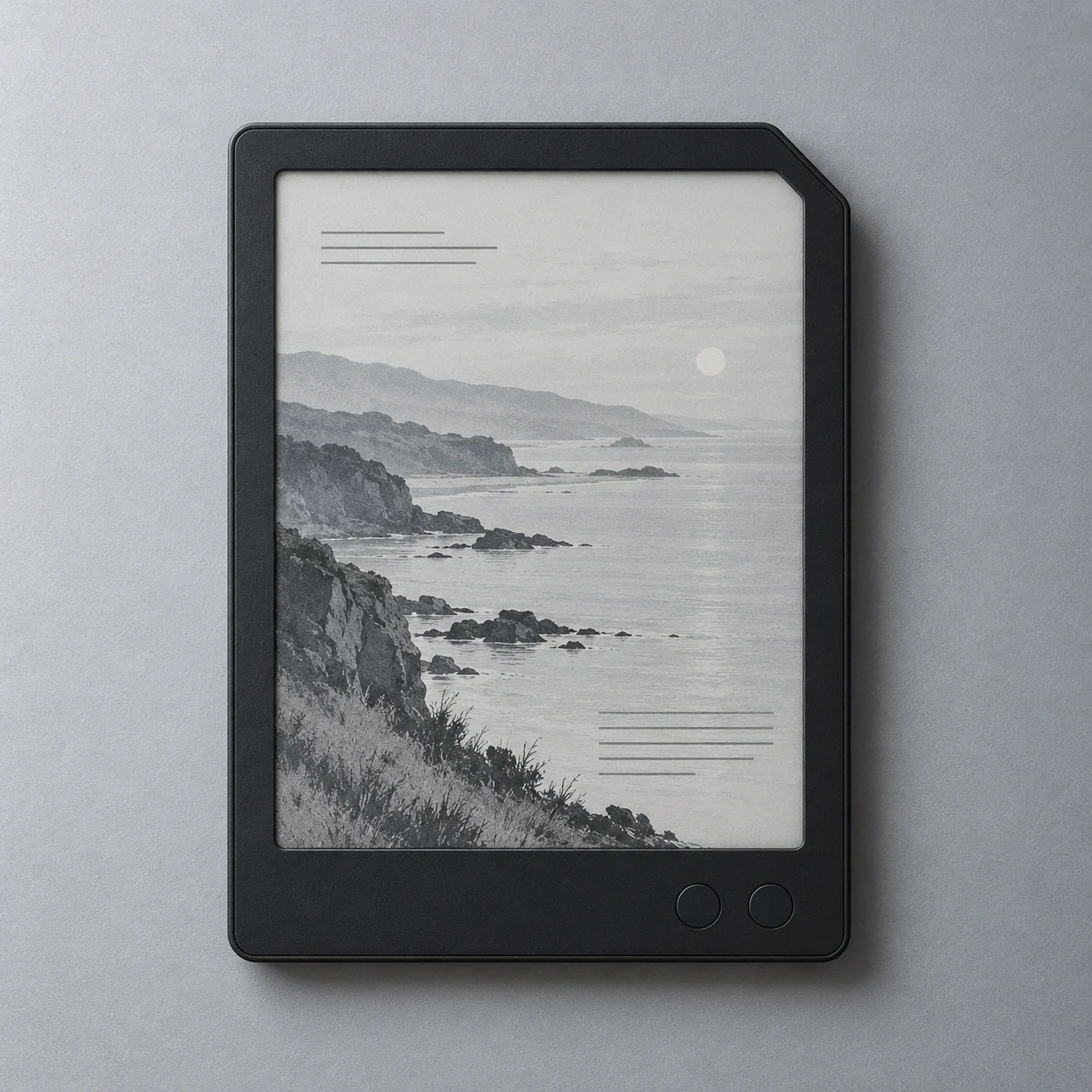
Drift 6
The pocket chapter. Reflowable reading is the starting task.
Collection / Three original concepts
A pocket chapter, a reference margin or an open work page. These instruments frame three reading tasks so the next trial can be specific.
The pocket chapter. Reflowable reading is the starting task.
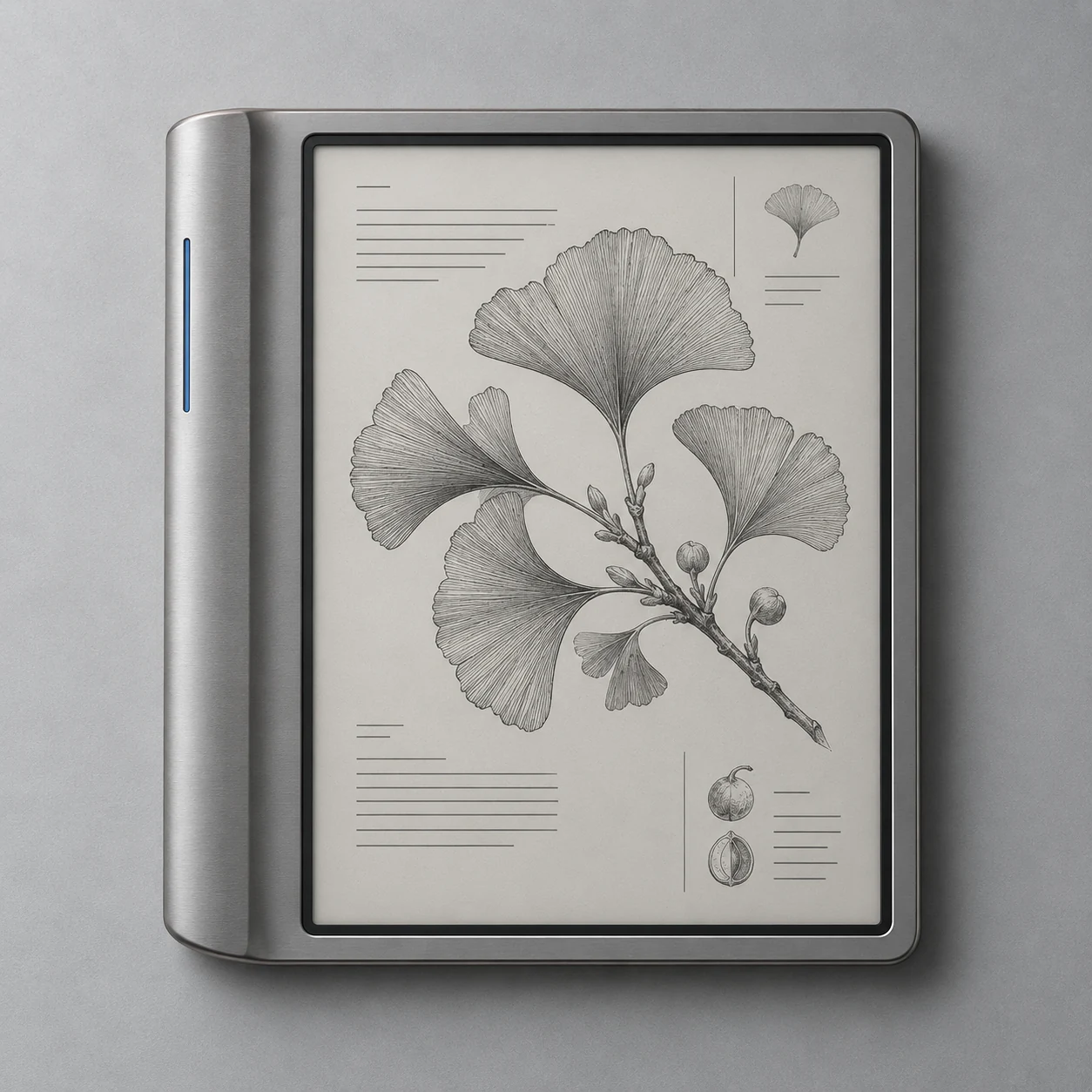
Room for the margin. Reading with references is the starting task.
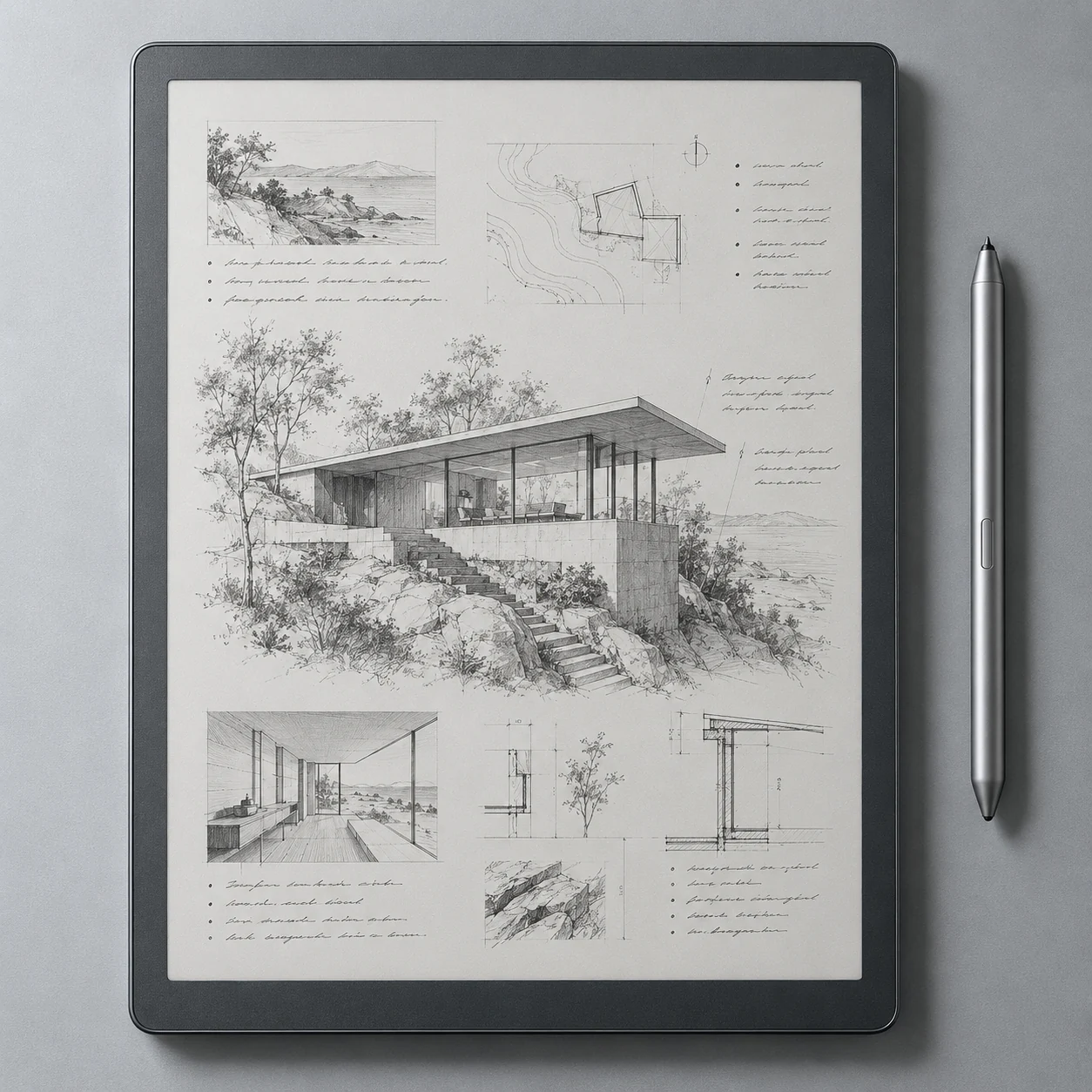
A document, opened. Documents and hand notes is the starting task.
Fictional instruments. All sizes and features are illustrative concept values, awaiting sample verification.
These pairs are task hypotheses, not rankings. Start with a pair, add the third if it clarifies the tradeoff, then record what still needs evidence.
Try reflowable chapters, a larger type setting and return from footnotes. Carry size and source navigation both matter.
Open this pair ↗Try a fixed-layout page with small labels. Observe zoom, link navigation and the space used by the device and its accessories.
Open this pair ↗Compare a compact chapter reader with a desk-oriented note surface. Decide whether one task is primary or two instruments would serve different contexts.
Open this pair ↗No price, availability, runtime, drop resistance or certification is supplied. The catalog is a designed concept study. Use its size and workflow distinctions to write a sample plan, then ask a real supplier for the configuration, file behavior and evidence that matter.
Choose the reading task
Bring a representative file
Observe one limiting interaction
Record the unanswered question
From comparison to questions
Carry the concept distinctions into a local evaluation brief and review them before any future supplier discussion.