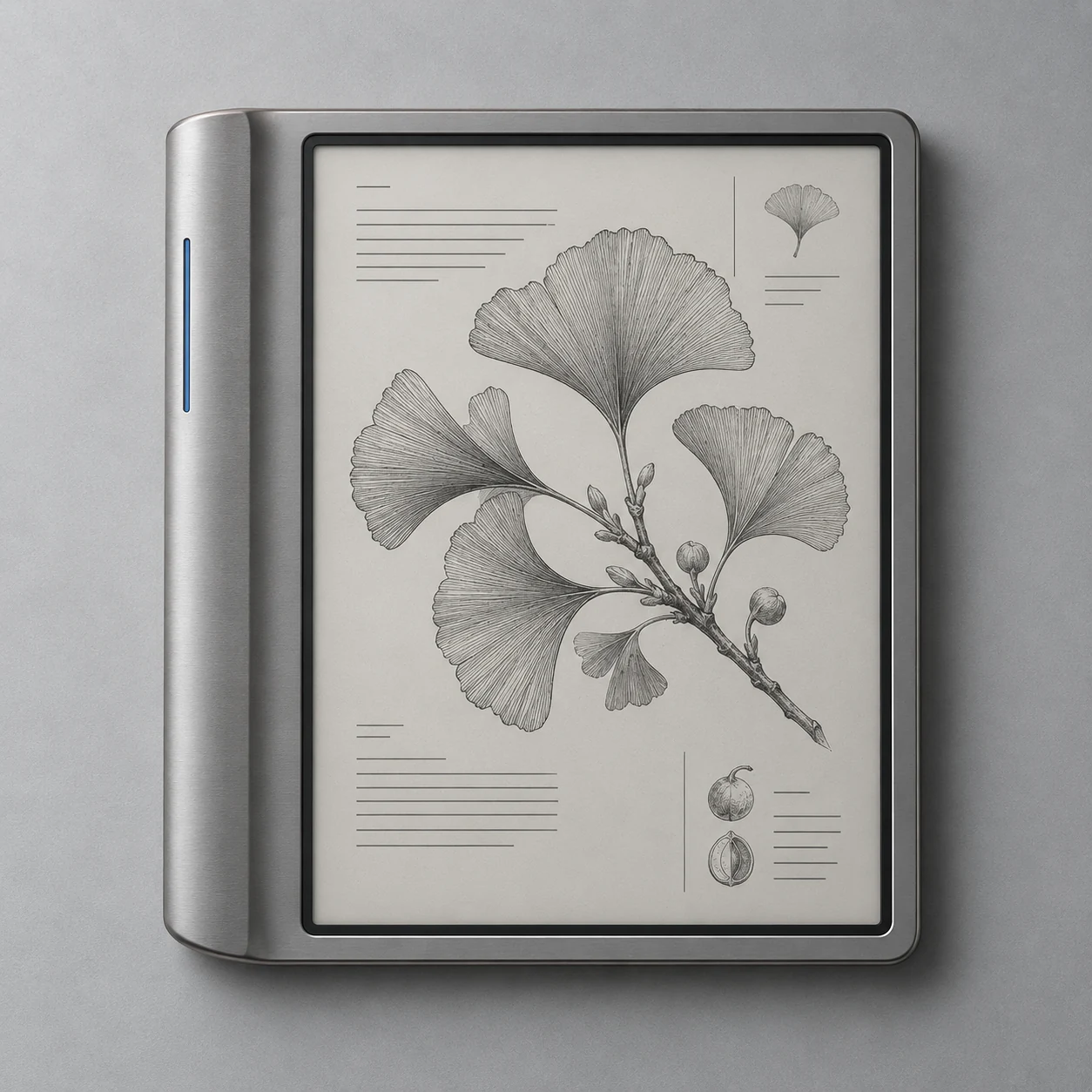
Reflow and fixed layout
A reflowable chapter can change line length and text size while preserving reading order. A fixed-layout document keeps the original page geometry. Put both in a sample plan: a successful novel page does not establish how a table, plan or scan will behave.
A repeatable viewing condition
Choose a normal desk, a brighter room and a dimmer reading corner. Keep the same source page, text size and viewing position as you change devices. Record the setting and an observation instead of converting a visual preference into an unmeasured performance claim.
Look at the difficult page
Include faint lines, small labels, a photograph and mixed type sizes. Ask whether the important information survives the display mode. A refresh demonstration should be observed in context, including navigation back to a page, rather than inferred from a specification label.
A practical sample set
- 01
Small caption in the original file
- 02
Diagram with thin gray lines
- 03
Chapter with footnotes
- 04
Same page under three lighting conditions
Which source page is hardest to read, and what makes it difficult?
Record it as unresolved. A future sample or document should provide the answer before a purchasing decision.
Add context to the local brief