A change needs a trail.
Keep the current drawing and the earlier reference distinguishable, even when the parts look almost identical.
Say what “current” means here.
The local desk offers three states: current revision declared by author, revision not confirmed, and superseded reference only. These are organizational labels. They do not establish who has authority to release a drawing or whether a supplier has acknowledged the change.
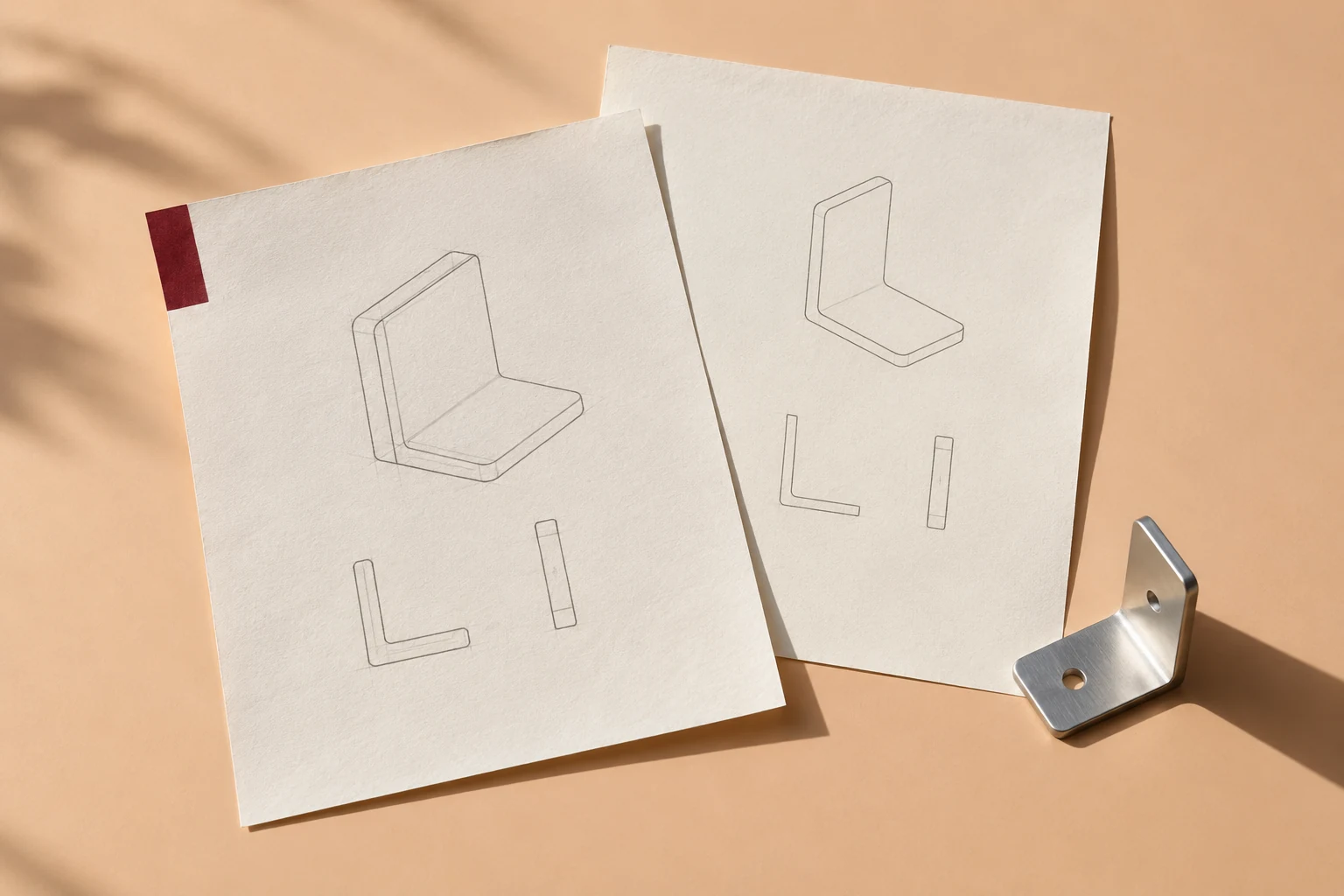
Keep an old reference useful.
Name the intended controlling drawing and revision in the packet.
Explain why the earlier drawing or sample is included. Do not let its mere presence imply approval.
Describe the affected relationship or feature and point to an authorized change record when available.
List what still needs supplier or engineering review before the change is acted on.
The template does not perform a CAD comparison. It cannot certify that only the described feature changed or that all dependent records have been updated.
An illustrative revision conversation.
Imagine that a pocket rail sample came from an earlier drawing, while the latest discussion concerns the locating interface. The packet should identify both references, describe what the sample can illustrate and leave the unresolved relationship visible. No revision letter or approval state is prefilled as factual evidence.
Never use a physical sample to silently override a written requirement. Record the discrepancy and ask the responsible people to resolve it.
Bring the trail into a repeat discussion.
A repeat order can carry a new revision, finish note or inspection requirement. Compare the current reference set to the last agreed set before assuming that “same as before” is enough.
Read the repeat-order handover ↗Give the next conversation a clear starting point.
Collect the drawing reference, sample relationship and inspection questions in one local working packet.