The method is the handover.
A fictional studio workflow for keeping intent, references and unresolved decisions in the same conversation.
Read the source.
Start with the references the buyer intends to control the discussion. Write down the drawing identity, revision and related model. If an older drawing is supplied only for context, label that role rather than silently treating it as current.
The evidence desk asks for references as text. It cannot inspect files, reconcile CAD with a drawing or verify that an author is authorized to release a revision. Those checks belong in the actual supplier workflow.
Connect the physical reference.
A sample, photograph and drawing each answer different questions. Record why a sample is being discussed: perhaps to explore fit, clarify appearance or compare a revision. A physical object without a known history should not quietly become the authority for production.
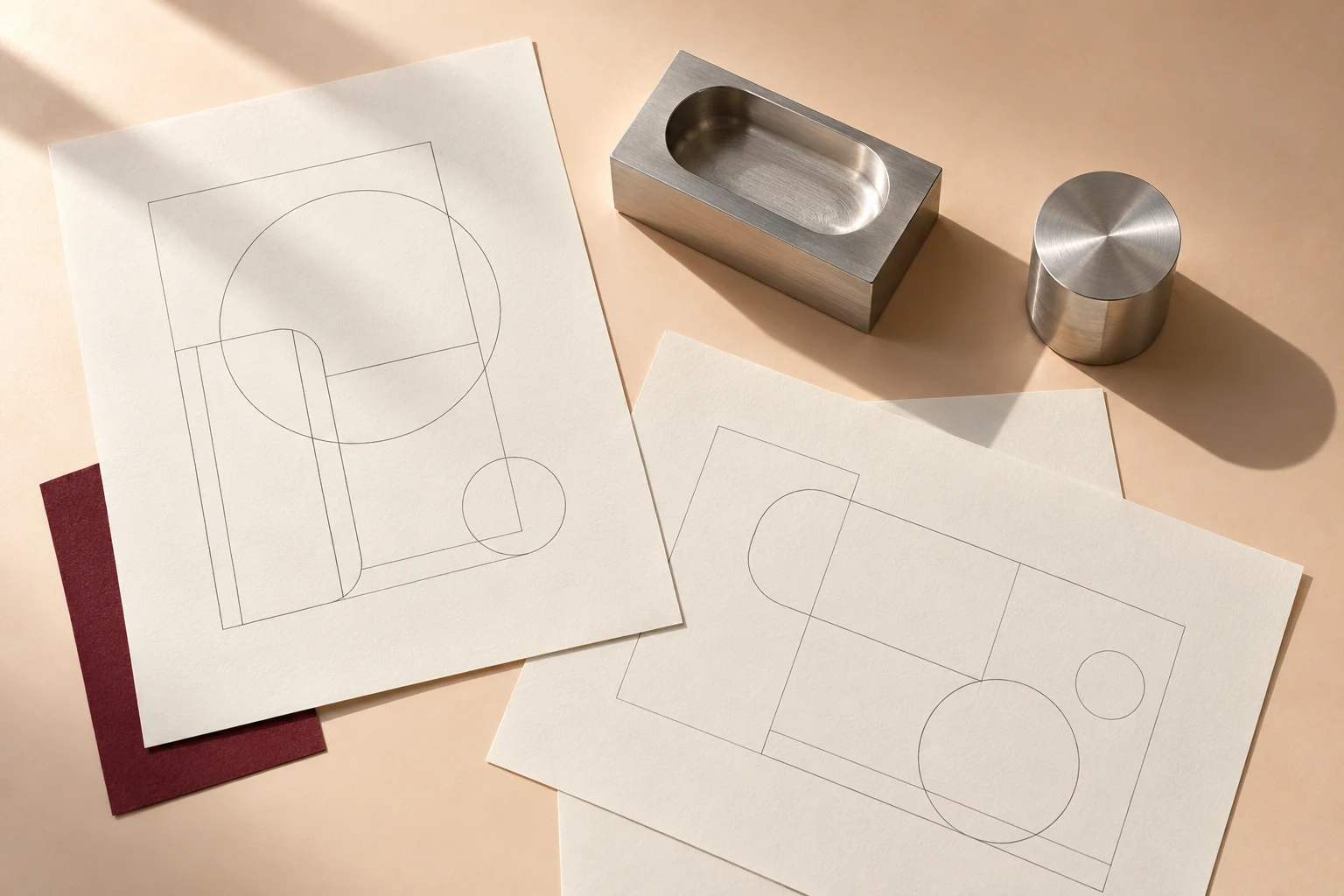
Make open decisions explicit.
What function or interface is important, and who can clarify it?
Do drawing, model and sample references refer to the same revision?
What evidence is requested, in what format, and who reviews it?
What is still unknown or requires agreement before a quote or release?
An open question is a useful result. The packet deliberately permits unresolved items so that the next person can see them, rather than mistaking completeness of a form for engineering approval.
Give the next conversation a clear starting point.
Collect the drawing reference, sample relationship and inspection questions in one local working packet.