Ask what the record should show.
Inspection planning begins with a clear question and an agreed source, rather than a generic badge or a table of invented results.
Separate the scope from the result.
An inspection plan describes what should be reviewed and how the evidence should be reported. A result describes what was actually observed under that plan. This fictional studio supplies neither a measurement result nor proof of a manufacturing capability.
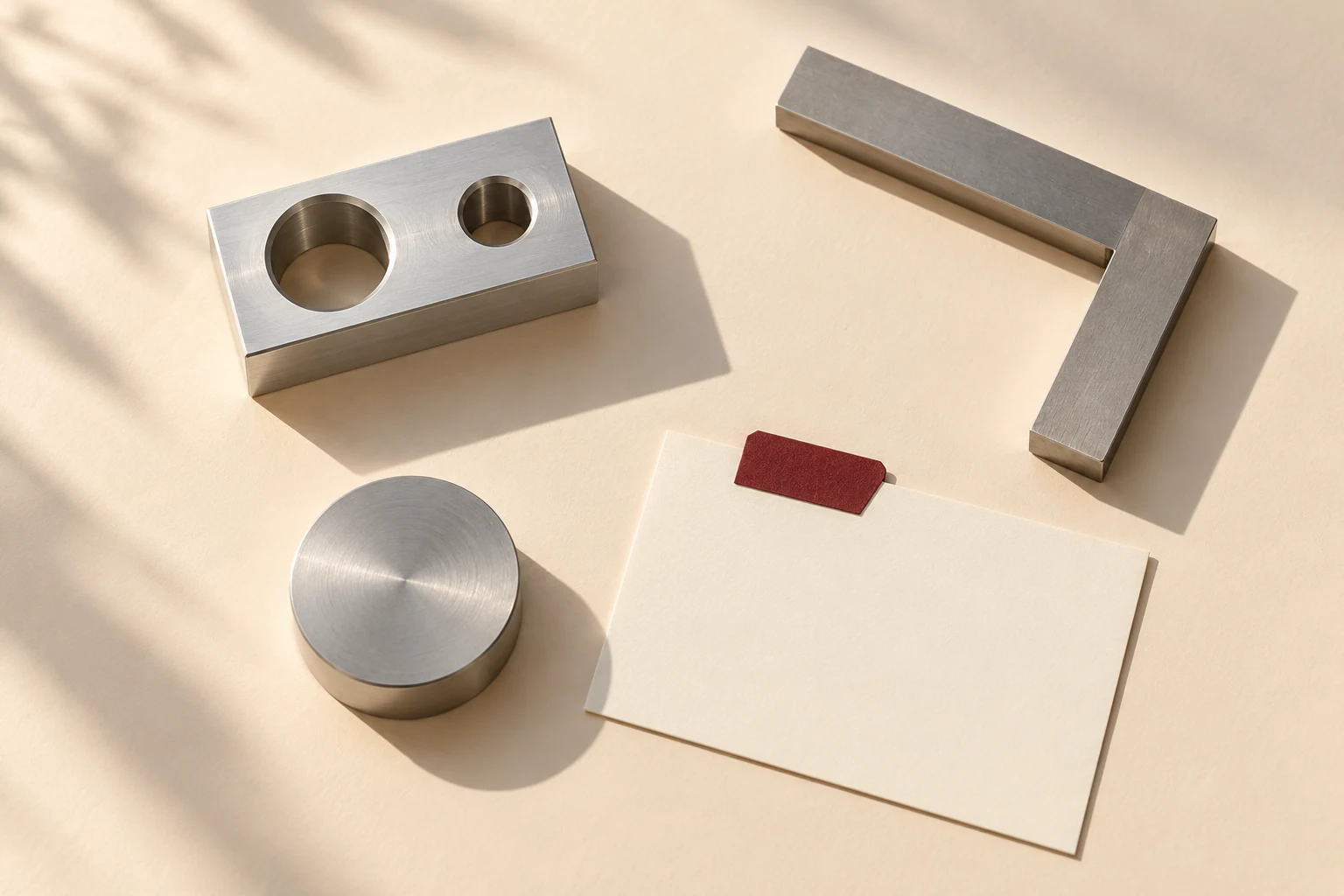
Questions worth agreeing.
Which drawing references are important to the intended function? Who resolves unclear or conflicting requirements?
What method and part condition should be discussed by the responsible specialists? Do not infer suitability from an instrument photograph.
How should results identify the part, drawing revision, sample or lot and applicable scope?
Who reviews the evidence and what happens when a question remains unresolved?
The desk allows “open,” “questions drafted,” or “agreement reference supplied by author.” Even the last option remains an author statement, not verification by this website.
Avoid implied coverage.
A report name alone does not establish which features were checked, how parts were selected or what the agreed acceptance basis was. Request the scope explicitly. Do not infer that a sample result proves every item in a later batch.
This template does not select a sampling plan, issue an inspection certificate, calculate process capability or apply an industry standard. Those choices require project-specific agreement.
Bring the right notes to the desk.
Record the inspection-plan or agreement reference if one exists. Otherwise describe the questions that need discussion and keep the status open. The packet preserves those unknowns in a separate list.
Open the local evidence desk ↗Give the next conversation a clear starting point.
Collect the drawing reference, sample relationship and inspection questions in one local working packet.