Pocket rail
A compact carriage-like rail for a fixture discussion. The wide locating surface, recessed pocket and side interfaces invite a conversation about what locates the assembly and what only clears a mating part.
Use this starting point ↗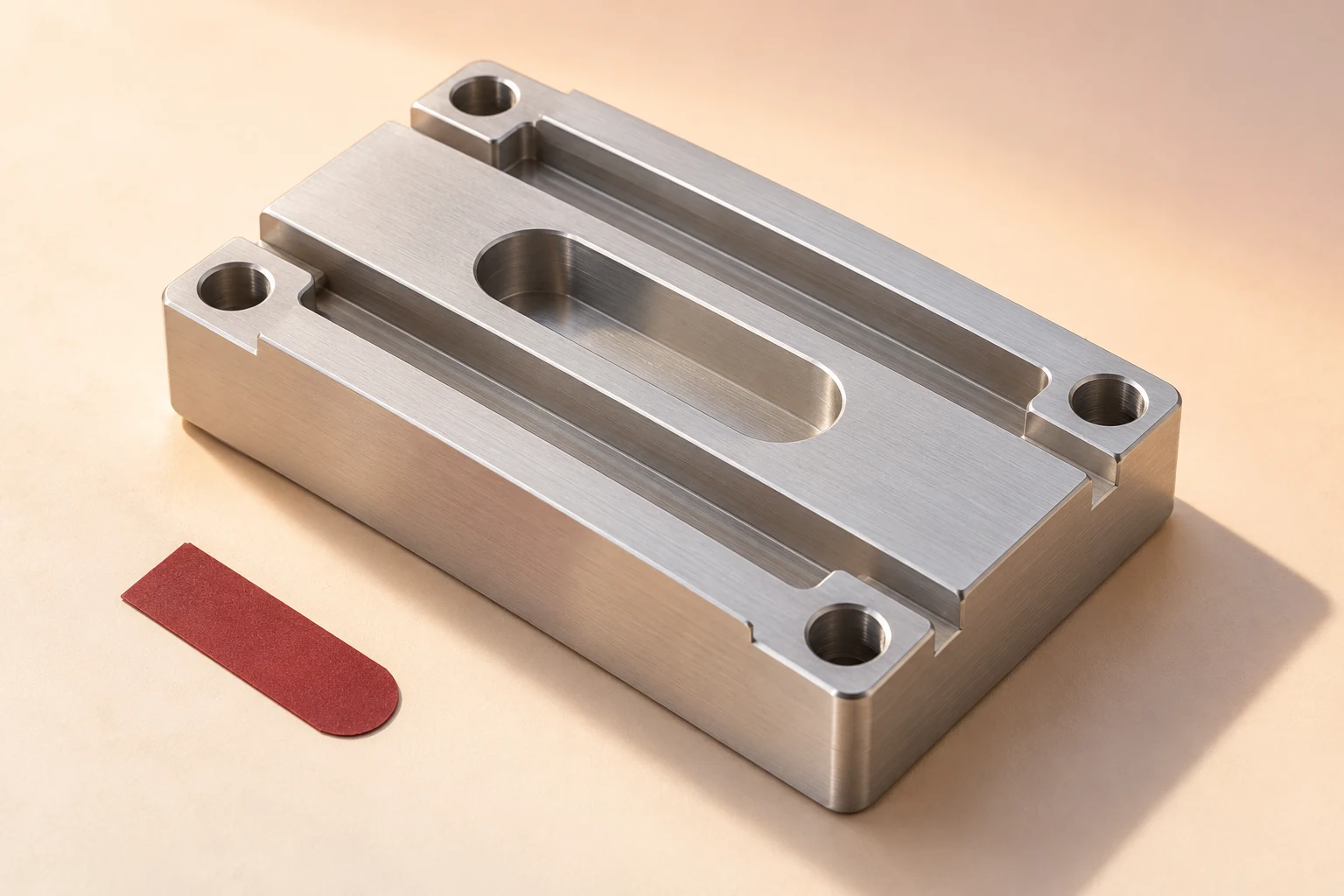
Read the intent first.
The pocket rail is an illustrative geometry study. Its role is to expose an easy handover mistake: a sample photograph can make every edge look equally important, while the assembly may depend on only a few surfaces. Begin with an explanation of the intended relationship, then point to the controlling drawing.
Which interface locates the rail, and which features only provide clearance?
Keep these decisions visible.
Name the surfaces that establish the part in the assembly. Ask the responsible engineer to identify the drawing references; do not infer datums from a render.
If a recess changes, ask whether the mating part, wall condition or workholding discussion also changes. Keep the model and drawing references aligned.
A sample made against an earlier revision may still be useful for discussion. Label it clearly so it cannot be mistaken for the current acceptance reference.
What is the sample for?
Describe whether the sample is intended for assembly exploration, appearance discussion or another limited purpose. Record which revision it represents and any known departures before comparing it to the current brief.
Read the sample-review note ↗What evidence is needed?
Start with the locating relationship. Ask which features need a record, how results should refer back to the drawing, and who will review the record. The template does not choose a measurement method or declare the geometry manufacturable.
Read the inspection-planning note ↗A useful handover contains…
- Current drawing identifier and revision
- Model identifier, or a clear absence note
- Marked discussion of locating versus clearance features
- Sample identity and revision relationship
- Open questions about inspection evidence
Download the dossier as a plain-text discussion aid. It contains no production dimensions or acceptance limits.
Download this example dossier ↓Give the next conversation a clear starting point.
Collect the drawing reference, sample relationship and inspection questions in one local working packet.