Appearance belongs in context.
Define what the visible reference is meant to explain, and where the functional interface still needs a decision.
Separate visual intent from a requirement.
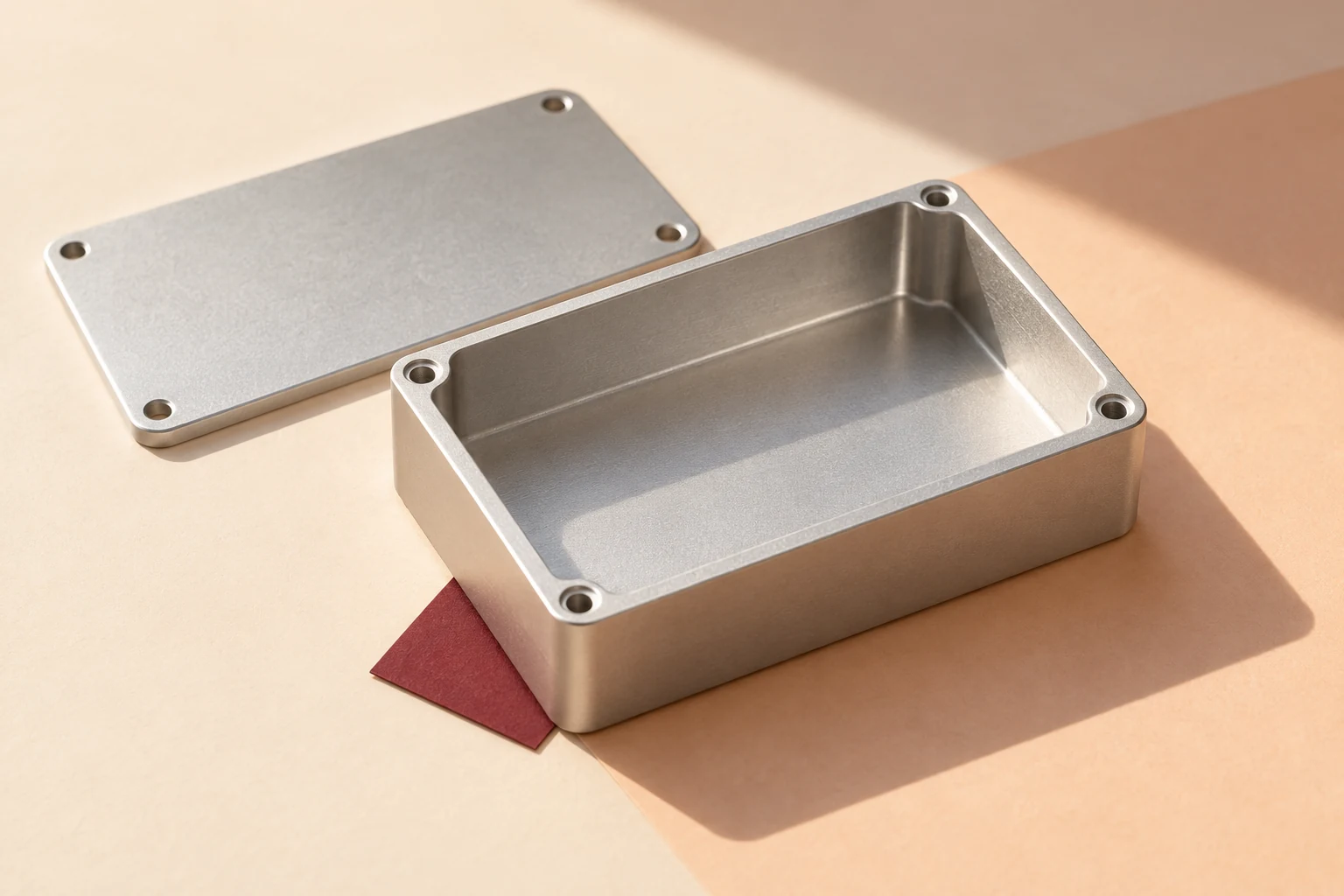
An image or reference sample can help explain an appearance preference. It cannot by itself define an exact coating, texture, color tolerance or process. Record the source of the visual reference and the questions that need agreement before treating it as a requirement.
Identify the interfaces to discuss.
Which surfaces interact with another part, and what drawing reference explains that relationship?
What requirements or restrictions need clarification with the responsible reviewer?
Which regions are cosmetic, and what reference will be used for the conversation?
Do the drawing, finish note and sample refer to the same intended revision?
The site does not calculate an allowance, recommend masking or assign a finish process. It keeps those issues visible for project-specific review.
Label the sample’s limits.
A sample used to discuss appearance may have a different geometry or history from the intended part. Say so. If its finish is not traceable to a specification, preserve that uncertainty instead of filling in a process name from memory.
Return to sample-review guidance ↗Give the next conversation a clear starting point.
Collect the drawing reference, sample relationship and inspection questions in one local working packet.