Instrument 03 / 10-inch study
Atlas 10A document, opened
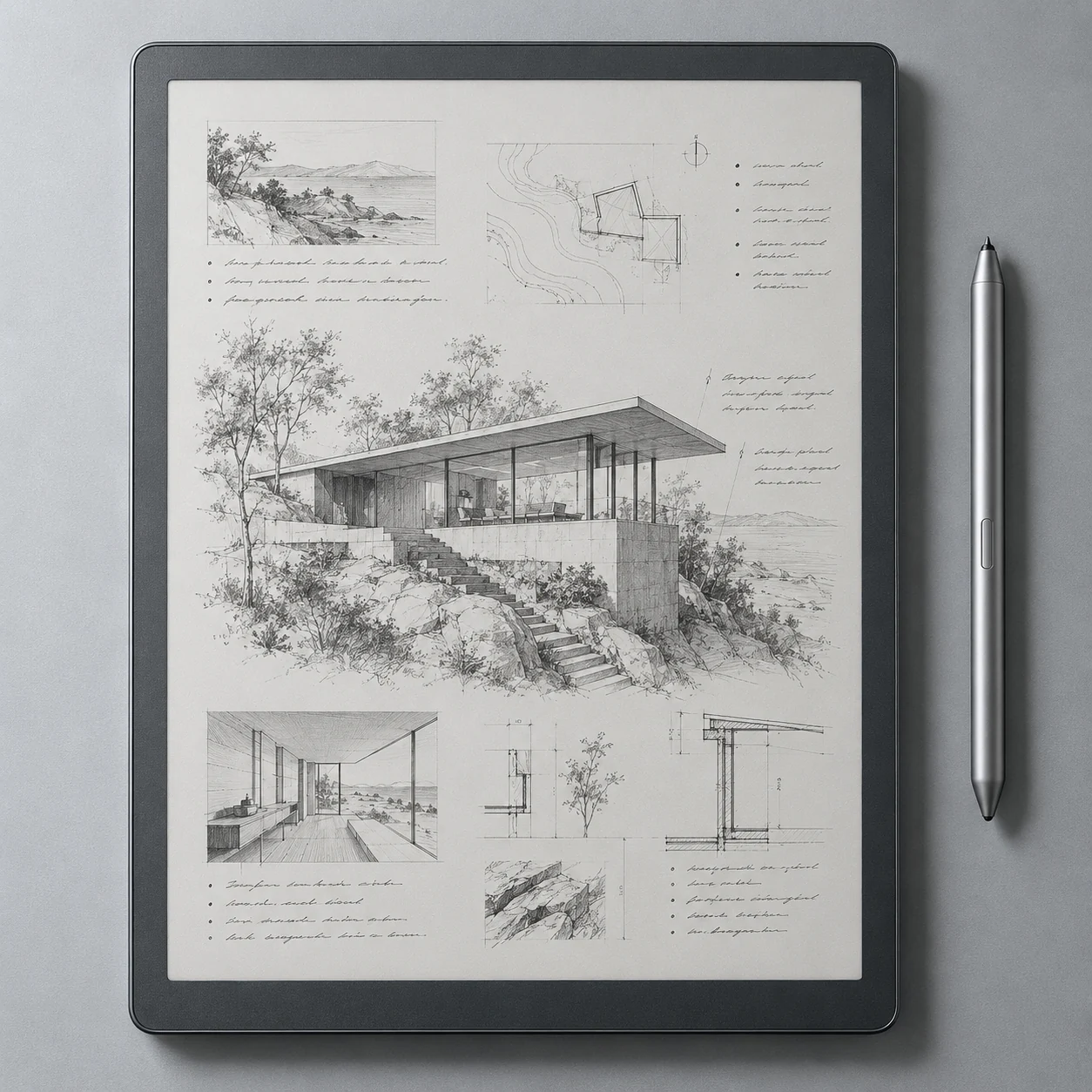
Atlas treats the reading surface as a work page. A larger canvas and a separate stylus create space for diagrams, document marks and handwritten thinking.
Fictional instruments. All sizes and features are illustrative concept values, awaiting sample verification.
Design intention
Space to read around an idea.
The symmetrical edge supports different resting orientations. The stylus is shown as a separate tool so its handling and storage can be evaluated independently. The note-layer workflow is proposed; no latency, pressure or recognition result is claimed.
The tradeoff
More page area means more device to carry. Atlas needs a practical trial on a desk and in a bag. A drawn mark is only useful if its relationship to the source and its export behavior are both understood.
Concept dossier
Illustrative, not measured or offered for sale.
- Screen study
- 10-inch study
- Finish direction
- Graphite shell
- Control proposal
- Touch + stylus concept
- Primary task
- Documents and hand notes
- Carry context
- Desk or structured sleeve
- Mark proposal
- Layered handwriting concept
- File proposal
- PDF / image concept
- Grip hypothesis
- Broad symmetrical edge
Sample evaluation
Try the whole sequence.
Annotate a plan, a scanned page and a document with small labels. Export, reopen and revise each note. Check what remains editable and what becomes a flattened image.
Three questions still open
- 01
Which layers remain editable after note export?
- 02
How does the stylus behave near the edge of a page?
- 03
Can document marks be recovered without a cloud account?
Charging, runtime, durability, file compatibility and market documentation are also unverified. The rendered device is an original illustration of intent; it is not sample evidence.
From comparison to questions
Keep the limitations in the brief.
This instrument’s open questions travel with the comparison. The exported record remains local and NOT SENT.