DEMO-GS-03 / Curved-member record
Tine Unit
Trace a curved member through its proposed source and issue history.
INDEPENDENT PRODUCT RECORD
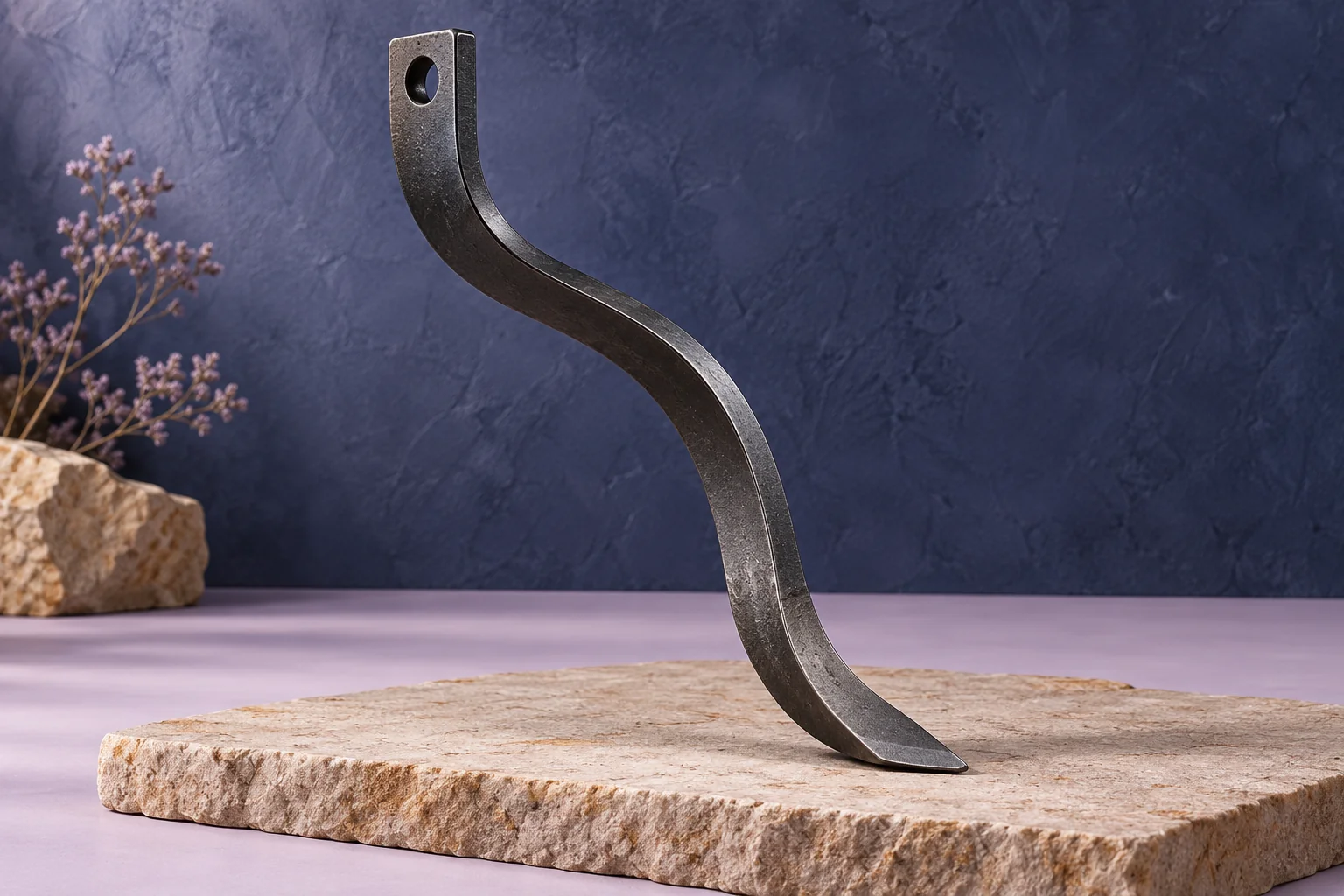
Tine Unit uses a long curved appearance and a simple upper hole to create a sculptural part dossier. The lower end and curve are visual concepts rather than a dimensional profile, forging specification or working characteristic. An isolated shape cannot prove its relationship to an actual frame.
Name the proposed member and request its current source. Record the actual counterpart assembly independently, including the issue represented by the relationship reference. If a changed curve, end or other attribute is proposed, retain the earlier member record as history and ask which correspondence needs a new answer.
The folio spreads three reading sheets around the selected identity: part, source and handoff question. This movement organizes information and gives no assembly or use instruction. Read issue history and dealer handoff to keep the source trail intact when another person continues the conversation.
The unresolved question
Which current member source identifies the proposed tine and its assembly relationship?
Discuss this identityRecord scope
| Visible form | Curved-member concept |
|---|---|
| Member identity | Provider source required |
| Assembly relationship | Current correspondence needed |
| Profile/use attributes | Not specified |
Before the next conversation
- Separate the member from its frame reference.
- Label historical issues.
- Carry the unresolved relationship into handoff.
A fictional DEMO code is an identity in this website study, not a real supplier SKU. The image and abstract geometry supply no measured attributes. The actual provider must identify the proposed item and current sources.
Download the blank Tine Unit source note