DEMO — fictional range. Local brief only, NOT SENT. No personal data is collected or transmitted.
MATERIAL
Six materials, and what each one does to light.
In a lighting fitting the materials are the optics as well as the finish. An interior colour decides where the light goes before any lens is added.
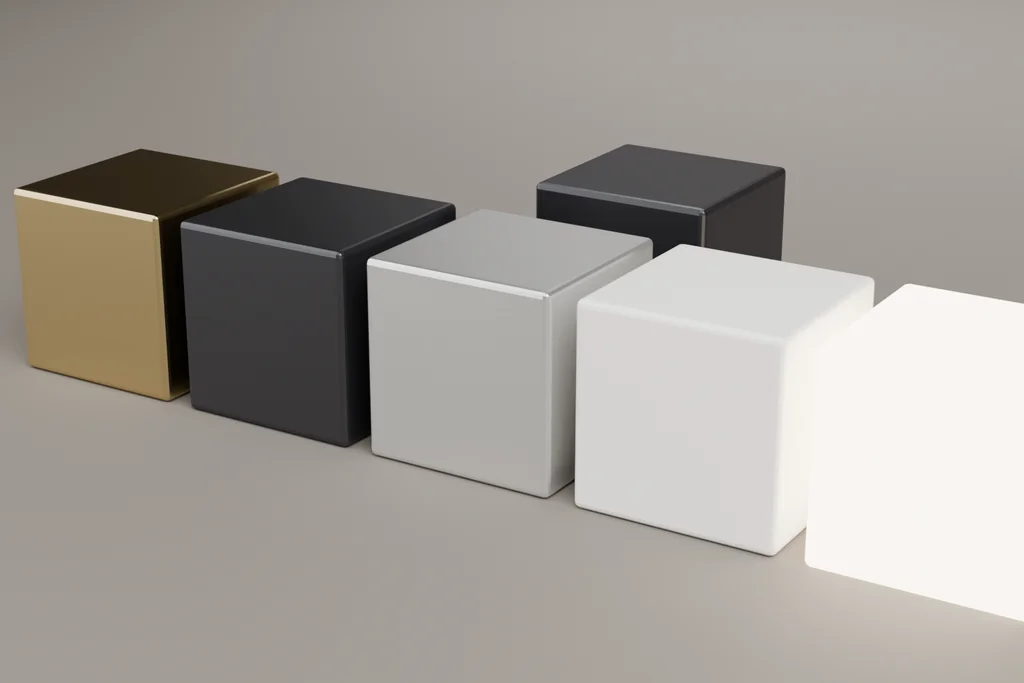
Illustrative material record
- Brushed brass
- Exterior and trim · warm, and it ages visibly rather than evenly
- Matte black metal
- Spotlights and track · absorbs stray light, which is what reduces glare
- Matte white metal
- Interiors · reflects light down rather than absorbing it
- Opal glass or polymer
- Diffusers · spreads the source, at the cost of some output
- Clear glass
- Lenses · passes light with minimal loss, and shows the source
- Anodised aluminium
- Reflectors · formed to shape, and the finish is what makes it reflect specularly
Illustrative examples for a fictional range. Material selection depends on the scheme, the environment and the maintenance, and is confirmed against a specification rather than a web page.
Why the interior finish is an optical decision.
Because light that hits the inside of a shade either comes back out or is absorbed. A matte white interior returns most of it downwards; a dark or polished one sends it where the design did not intend.
What a diffuser costs.
Output, and usually more than expected. Frosted glass spreads the source so it is comfortable to look at, and it absorbs some of the light doing so. The trade is glare against lumens.