Component
Circular connector
A metal-shell circular connector with seven contacts on a ring. The shell is the keying and the seal, so the contact layout is the easy part.
Open the component →CONTACTUMConnectors / demo
DEMO — fictional range. Local brief only, NOT SENT. No personal data is collected or transmitted.
CONNECTORS / FICTIONAL RANGE
CONTACTUM is a fictional connector range covering circular connectors, terminal blocks and crimp contacts. The site is organised around the interface rather than the component: a connector is judged by the joint it makes, and the joint depends on both halves, the crimp and the environment.
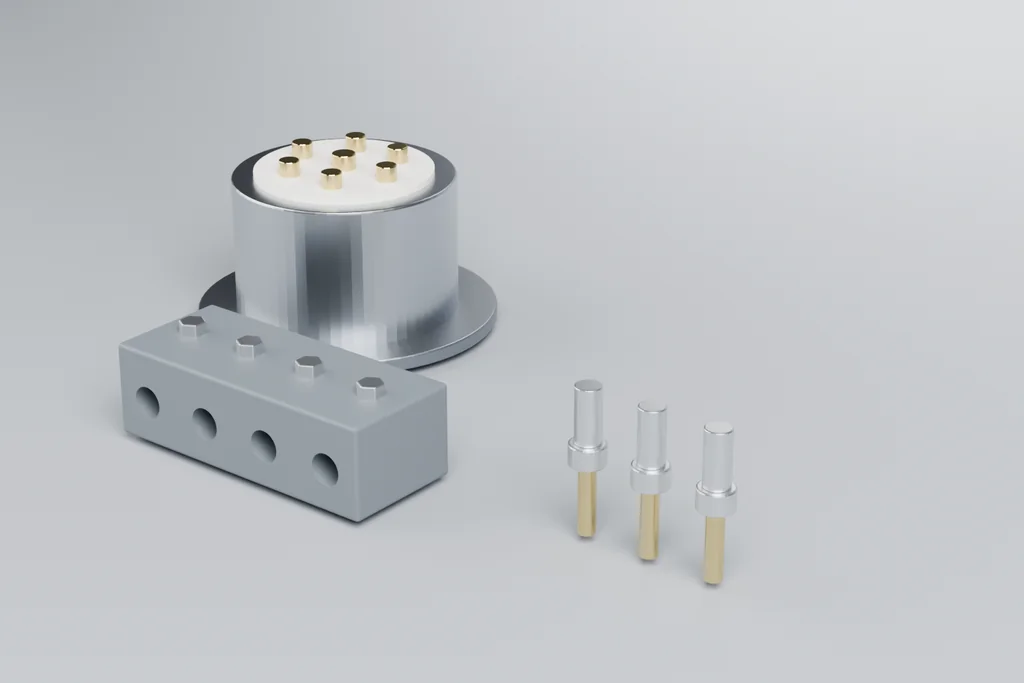
Each component in this range is defined by a joint it is only half of, and each joint fails differently.
Component
A metal-shell circular connector with seven contacts on a ring. The shell is the keying and the seal, so the contact layout is the easy part.
Open the component →Component
A four-way block with screw terminals and a wire entry per way. The pitch is the specification, because it sets the wire size the block will take.
Open the component →Component
A crimped contact with a mating pin, a retention shoulder and a barrel. The crimp is the connection: everything else only holds it in place.
Open the component →Four things that belong to the joint or the installation rather than to any single part.
Because that is where the resistance is. A contact pair with a poor crimp behind it will heat at the crimp, and no amount of connector specification prevents that.
Whether your joint is adequate. That depends on the current, the ambient temperature and the crimp, and it is established by testing the assembly.