Note 01
Read the enclosure
Begin at the doorway and trace the first view across the space. Then sit at the proposed seat. A source that is hidden from one viewpoint may be directly visible from the other. Record both positions before choosing a family.
The low Reed concept can form a path-edge discussion, while Lintel puts the threshold on the wall. Cairn becomes relevant only when a particular planting detail deserves attention. None of these suggestions establishes a finished lighting layout.
Note 02
Let the surfaces participate
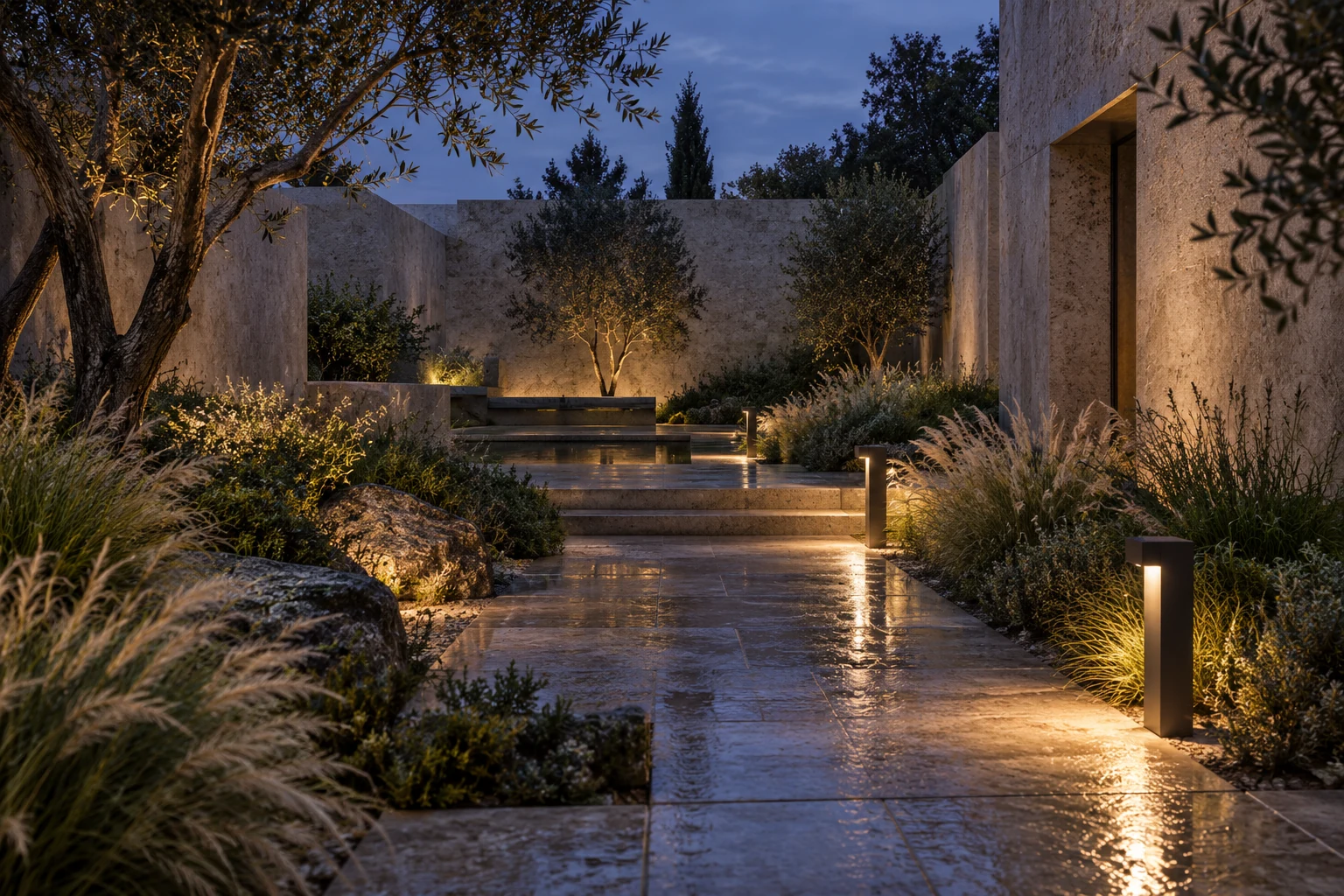
Stone, render, timber and leaves return light differently. Our image studies a damp paved court, but it is not a forecast of reflected brightness. Review the actual paving sample in dry and wet conditions with a physical mock-up.
Keep planting growth and maintenance routes in the discussion. A desirable view on the first day may hide a fixture or block its access later.
Note 03
Give the evening an ending
The arrival scene and a late quiet scene need not use the same operating extent. Record which areas stay in use, what nearby rooms look onto the court, and which sources might be dimmed or switched off.
Ask the project team to check site-specific obligations, control compatibility and ecological context. This demo does not prescribe a curfew or claim a DarkSky approval.