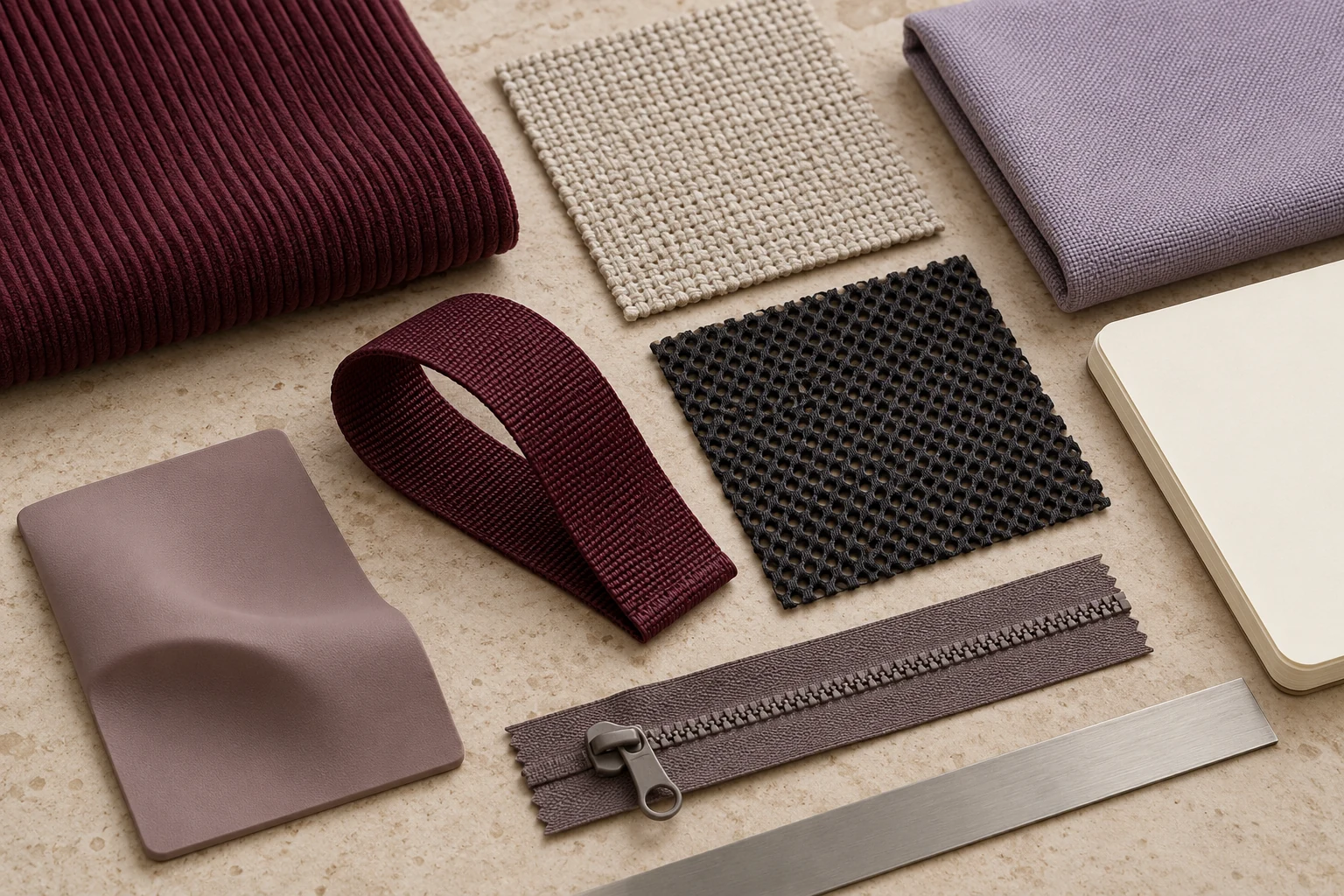
Palette across materials
Choose a shared direction, then approve separate upholstery, shell and molded swatches. Request explicit matching limits rather than expecting identical surfaces.
10 / PRIVATE LABEL
Begin with the collection architecture, then specify palette, label placement and packing. Every customization direction remains subject to sample feasibility and supplier confirmation.
A CONTROLLED SET OF DECISIONS
Choose a shared direction, then approve separate upholstery, shell and molded swatches. Request explicit matching limits rather than expecting identical surfaces.
Consider sewn labels for textile components and a reviewed mark position for the molded mat. Artwork dimensions, material interaction and legibility need sample checks.
Prepare a hierarchy for product name, size reference, required warnings and care information. Market-specific information requires appropriate review before printing.
ARTWORK HANDOVER
For a real development request, prepare vector artwork, a color reference, placement dimensions and a drawing that locates each mark relative to a seam or edge. Add the intended market and required languages.
There is no artwork upload in this demo. The local worksheet records the direction only. Commercial feasibility, tooling, price and timing must be established with a real supplier.
Follow the sample pathwayAPPROVAL NOTES
| Decision | Record before approval | Re-open review when |
|---|---|---|
| Color | Material-specific swatch identifiers | Supplier, construction or dye/compound changes |
| Placement | Dimensioned artwork and sewn/molded sample | Seam, panel or tool geometry changes |
| Pack copy | Approved market-specific artwork revision | Market, claims, materials or instructions change |
NEXT, MAKE IT SPECIFIC
Choose a standard concept palette or mark the palette as buyer-defined. The brief will keep that decision separate from product material selection.
Compose a set