DEMO — fictional range. Local brief only, NOT SENT. No personal data is collected or transmitted.
MATERIAL
Six materials, and what each one is chosen for.
For parts bought in quantity, material is chosen for how it machines at speed as much as for how it performs. A material that machines badly costs more per piece than it saves per kilogram.
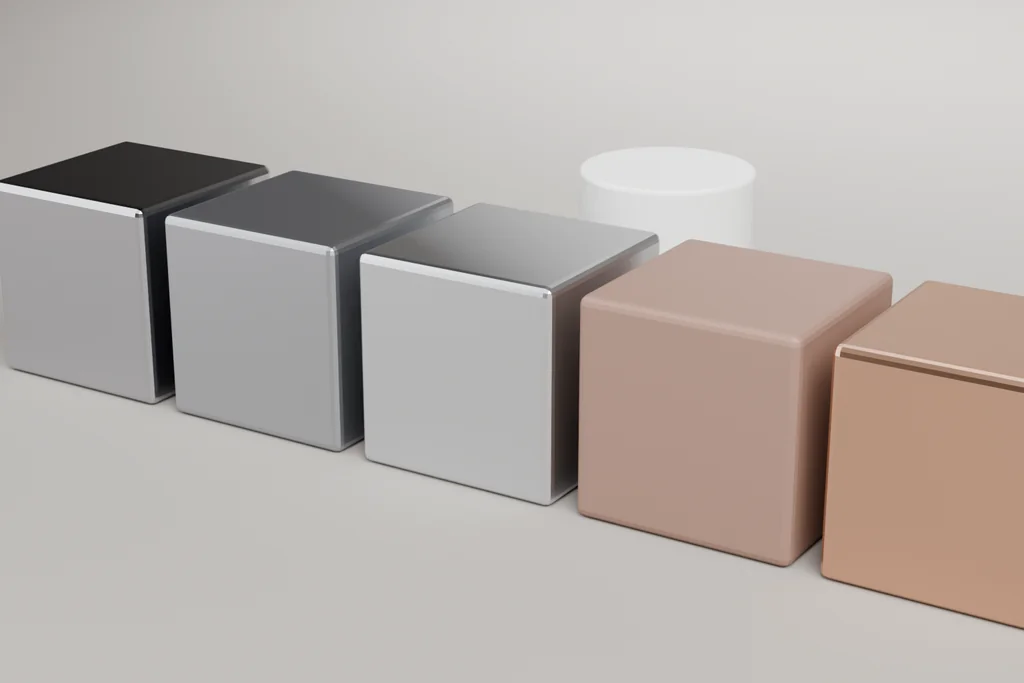
Illustrative material record
- Free-cutting steel
- Standoffs and spacers · machines fast, threads cleanly, needs plating
- S355 steel
- Brackets and formed parts · weldable, tough, forms predictably
- Cast iron
- Pulleys and damped parts · machines well, absorbs vibration, heavy
- Aluminium 6082
- Light brackets and housings · fast to machine, anodises well
- Brass
- Electrical standoffs · machines very well, threads cleanly, costs more
- Delrin
- Insulating spacers · quiet, dimensionally stable, expands more than metal
Illustrative examples for a fictional range. Material selection depends on the load, the environment and the finish, and is confirmed against a specification rather than a web page.
Why machinability is a real specification.
Because a part made in hundreds is priced by the minute. A material that machines thirty percent slower costs thirty percent more per piece, and that is usually more than the material price difference.
What certification covers.
That the material delivered is the material specified, traceable to a heat or batch. It does not cover whether the specification was right for the part.