Keep label artwork and packaging identity tied to the actual article revision.
Ask the provider which product code, label artwork and supply configuration apply to the object being discussed. A blank space in a concept image is only a visual reference. It supplies no patient information, barcode identity, registered label or approved packaging statement.
If artwork, closure or pack form changes, retain the earlier file and identify the proposed revision. Ask which product and supply documents need to change with it. Keep artwork review and actual commercial supply approval separate so a visually finished label does not imply a confirmed product record.
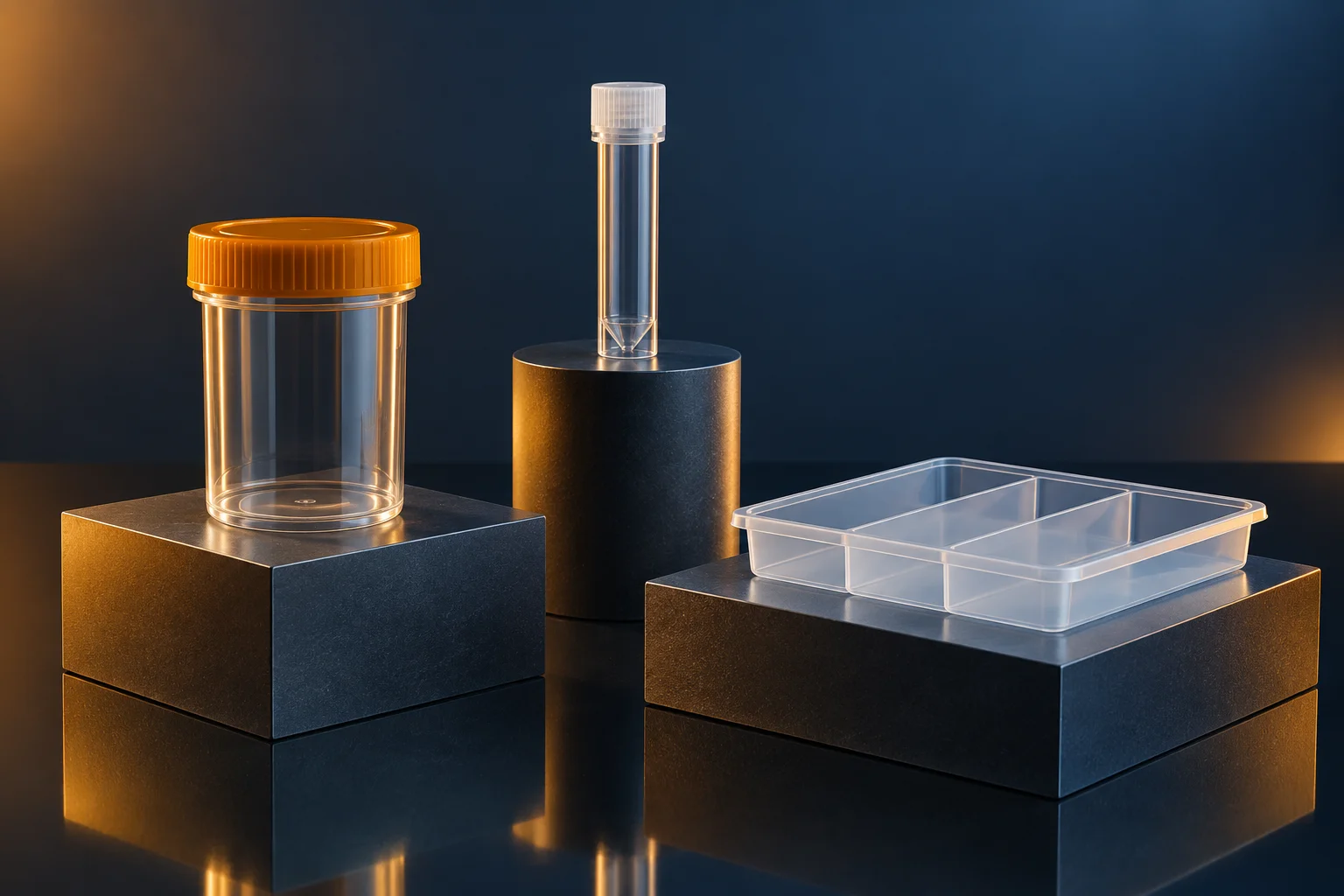
An empty translucent jar with an amber cap shown separately. The dossier names the body, closure and label references as different parts of a document conversation instead of inferring capacity or compatibility from a photograph.
Next question: Which body drawing, closure reference and label artwork revision identify the same actual jar?
An empty clear tube with a simple removable amber cap. The object is intentionally free of contents and graduations so the website can demonstrate identity, drawing and revision questions without representing a clinical collection system.
Next question: Which actual tube and cap identities match the drawing and current provider document?
A shallow translucent tray with three broad empty compartments. Its individual dossier focuses on the outline, arrangement and current drawing reference, creating a different document task from the jar and tube.
Next question: Which outline, compartment arrangement and document revision describe the actual tray being discussed?
A PRECISE NEXT DISCUSSION
Take the reference
with you.
Keep the object, pack or document question in a local record. It remains NOT SENT; no product, order, approval or clinical use is confirmed.