Take an object code, a review view and the current unresolved question into the next conversation.
Start from the jar, tube or tray dossier. Identify whether you need to review the physical object, the label reference or a file revision. Keep the actual drawing and sample identifiers in your own project record. The reference desk offers a compact way to connect those questions before preparing a local NOT SENT file.
Ask the real provider to confirm the product identity, relevant documents, actual sample arrangements and commercial terms. Review the saved text or JSON before using your own verified communication channel. This demonstration creates no inquiry, regulatory conclusion, supplier approval or available laboratory article.
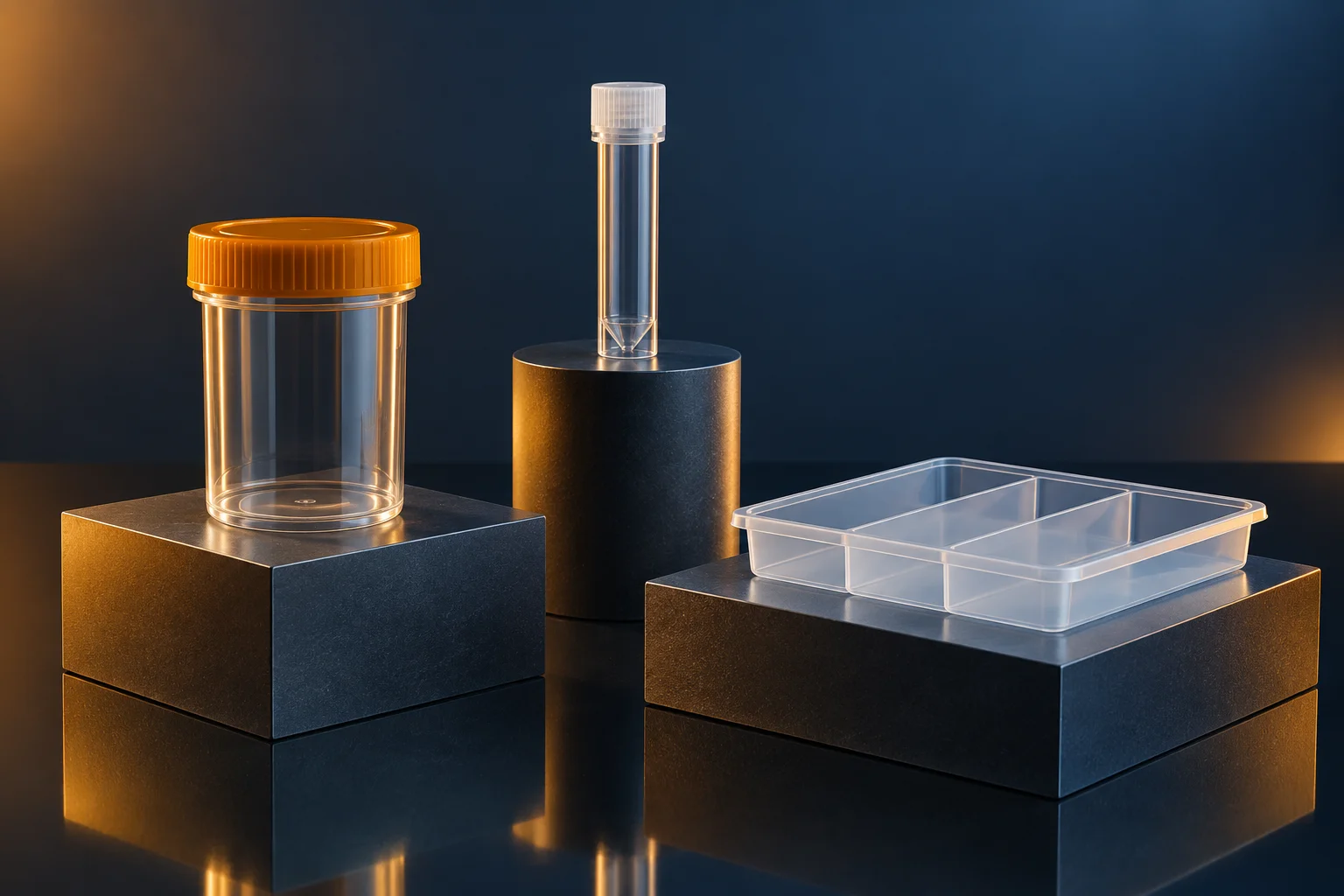
An empty translucent jar with an amber cap shown separately. The dossier names the body, closure and label references as different parts of a document conversation instead of inferring capacity or compatibility from a photograph.
Next question: Which body drawing, closure reference and label artwork revision identify the same actual jar?
An empty clear tube with a simple removable amber cap. The object is intentionally free of contents and graduations so the website can demonstrate identity, drawing and revision questions without representing a clinical collection system.
Next question: Which actual tube and cap identities match the drawing and current provider document?
A shallow translucent tray with three broad empty compartments. Its individual dossier focuses on the outline, arrangement and current drawing reference, creating a different document task from the jar and tube.
Next question: Which outline, compartment arrangement and document revision describe the actual tray being discussed?
A PRECISE NEXT DISCUSSION
Take the reference
with you.
Keep the object, pack or document question in a local record. It remains NOT SENT; no product, order, approval or clinical use is confirmed.