The reference desk organises information for a purchasing review, not for a laboratory or clinical procedure.
Name the object, destination market and purpose of the provider conversation. A question about a body drawing is different from a question about a cap, label or tray arrangement. Let the appropriate responsible parties establish actual intended use and product requirements through current provider documentation.
Do not infer compatibility, transport suitability, cleaning methods or clinical use from this empty concept imagery. If the object must interact with another article, identify both actual references and ask the provider to review the relationship. Preserve the response with the corresponding revision rather than treating the interface illustration as evidence.
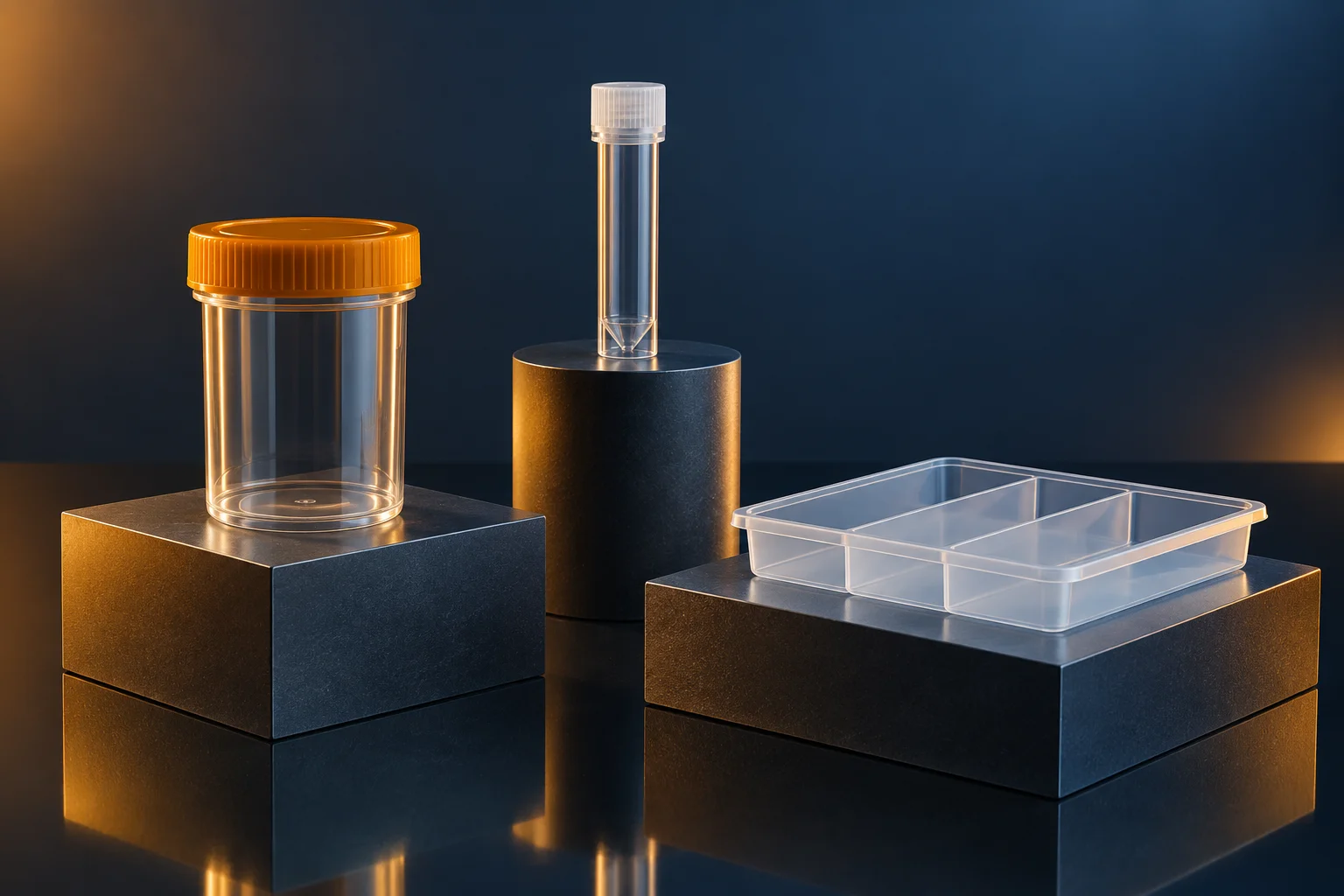
An empty translucent jar with an amber cap shown separately. The dossier names the body, closure and label references as different parts of a document conversation instead of inferring capacity or compatibility from a photograph.
Next question: Which body drawing, closure reference and label artwork revision identify the same actual jar?
An empty clear tube with a simple removable amber cap. The object is intentionally free of contents and graduations so the website can demonstrate identity, drawing and revision questions without representing a clinical collection system.
Next question: Which actual tube and cap identities match the drawing and current provider document?
A shallow translucent tray with three broad empty compartments. Its individual dossier focuses on the outline, arrangement and current drawing reference, creating a different document task from the jar and tube.
Next question: Which outline, compartment arrangement and document revision describe the actual tray being discussed?
A PRECISE NEXT DISCUSSION
Take the reference
with you.
Keep the object, pack or document question in a local record. It remains NOT SENT; no product, order, approval or clinical use is confirmed.