A translucent appearance cannot establish the declaration for an actual laboratory-supply item.
Request the current material description for the precise object and configuration under review. Keep the jar body and cap separate; do the same for the tube and its closure. A tray may have its own declaration and revision. Link each answer to the identified article rather than borrowing a description from a similar-looking product.
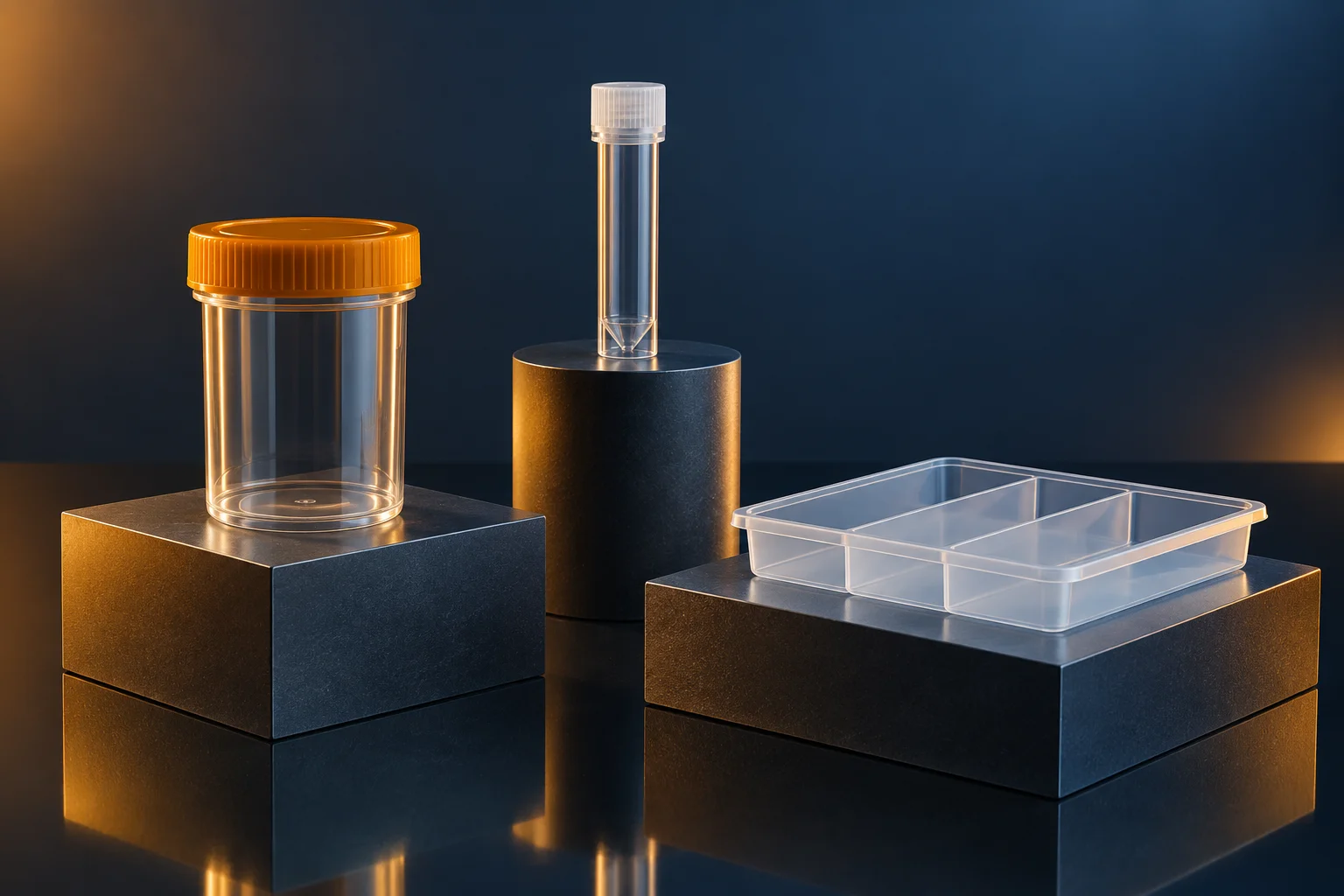
These empty concept images make the object relationship visible but do not prove composition or product characteristics. Ask the provider which current documents answer the intended purchasing question. If the material or configuration changes, record a new reference and review which earlier documents remain applicable.
An empty translucent jar with an amber cap shown separately. The dossier names the body, closure and label references as different parts of a document conversation instead of inferring capacity or compatibility from a photograph.
Next question: Which body drawing, closure reference and label artwork revision identify the same actual jar?
An empty clear tube with a simple removable amber cap. The object is intentionally free of contents and graduations so the website can demonstrate identity, drawing and revision questions without representing a clinical collection system.
Next question: Which actual tube and cap identities match the drawing and current provider document?
A shallow translucent tray with three broad empty compartments. Its individual dossier focuses on the outline, arrangement and current drawing reference, creating a different document task from the jar and tube.
Next question: Which outline, compartment arrangement and document revision describe the actual tray being discussed?
A PRECISE NEXT DISCUSSION
Take the reference
with you.
Keep the object, pack or document question in a local record. It remains NOT SENT; no product, order, approval or clinical use is confirmed.