A soft blue surface is a visual direction. A purchasing record needs an actual material identity.
Compare the visible face, fold and edge on the same identified sample. Ask the provider to name the material, construction, finish and revision in its current documentation. Keep that answer separate from the appearance of an AI-generated photograph. Similar-looking materials do not establish the same product characteristics.
The garment, rectangular sheet and square wrap create different questions. A tie detail belongs to the garment record; a cut outline belongs to the drape; face orientation belongs to the wrap discussion. Collect those references individually rather than treating a colour family as a complete specification.
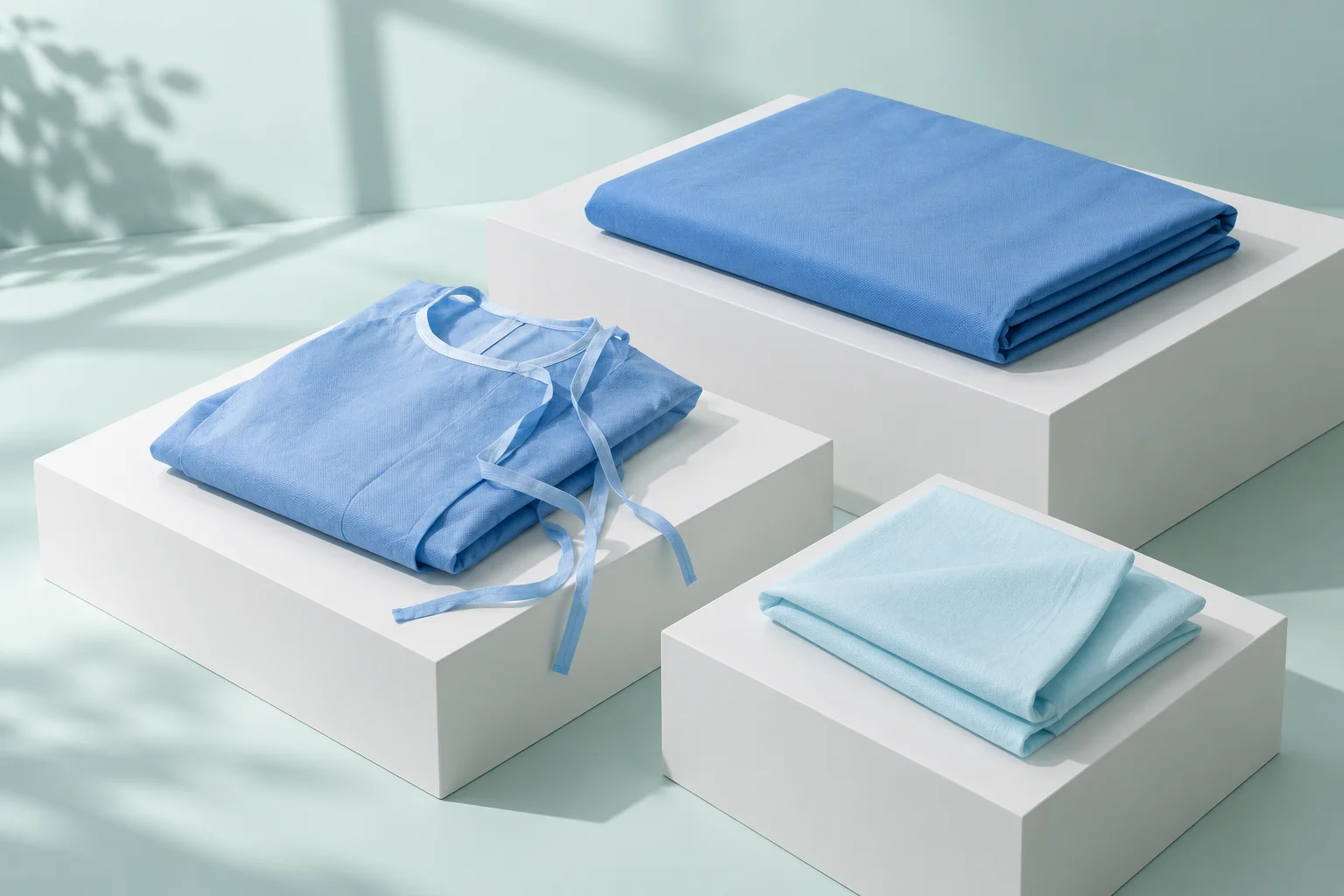
A light-blue nonwoven garment study with a visible sleeve fold and loose ties. Its dossier separates the garment outline, sample material and attachment detail so buyers can ask for the correct physical references.
Next question: Which drawing, material declaration and tie or seam sample identify the garment under discussion?
A broad rectangular nonwoven sheet shown with one corner unfolded. The plain geometry gives a buyer somewhere to start a conversation about the cut edge, orientation, actual dimensions and supply form.
Next question: Which actual cut outline, edge treatment and packaging reference belong to the proposed sheet?
A softly folded square nonwoven study that makes the visible face and layered edges easy to discuss. It is an appearance reference for a material and packaging conversation, rather than a represented sterile-barrier system.
Next question: Which material, face orientation and actual pack documentation identify the square-sheet sample?
A PRECISE NEXT DISCUSSION
Take the reference
with you.
Keep the object, pack or document question in a local record. It remains NOT SENT; no product, order, approval or clinical use is confirmed.