Bring the sample, the changed detail and the next question into the same conversation.
Begin with the product family and a specific dossier. Explain the review purpose, intended market and known configuration. Attach or identify the current drawing and sample in your own project channel. List material, attachment, cut-edge and packaging questions separately so the provider can respond to the right reference.
Ask the actual supplier to confirm availability, sample arrangements, minimum quantities, lead time and the documents appropriate to the proposed supply. None of those terms are offered here. Use the fold room to organise three views, then prepare a local NOT SENT record as a starting point for your own review.
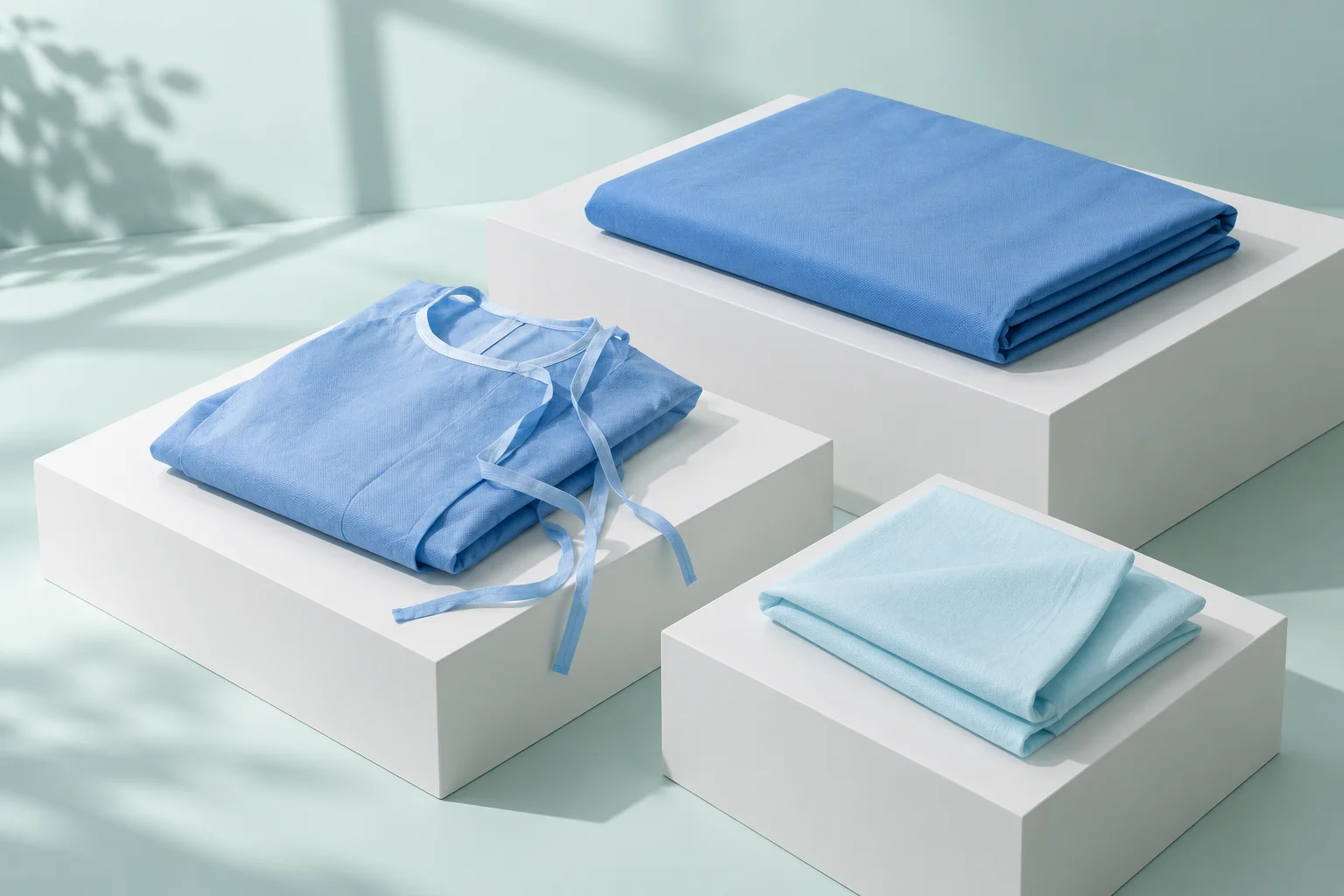
A light-blue nonwoven garment study with a visible sleeve fold and loose ties. Its dossier separates the garment outline, sample material and attachment detail so buyers can ask for the correct physical references.
Next question: Which drawing, material declaration and tie or seam sample identify the garment under discussion?
A broad rectangular nonwoven sheet shown with one corner unfolded. The plain geometry gives a buyer somewhere to start a conversation about the cut edge, orientation, actual dimensions and supply form.
Next question: Which actual cut outline, edge treatment and packaging reference belong to the proposed sheet?
A softly folded square nonwoven study that makes the visible face and layered edges easy to discuss. It is an appearance reference for a material and packaging conversation, rather than a represented sterile-barrier system.
Next question: Which material, face orientation and actual pack documentation identify the square-sheet sample?
A PRECISE NEXT DISCUSSION
Take the reference
with you.
Keep the object, pack or document question in a local record. It remains NOT SENT; no product, order, approval or clinical use is confirmed.