Milling / functional faces
Pocket access, internal corners and clamping references shape the machining discussion.
Engineering edition 02
Material, geometry and inspection stay connected. Use the following matrix to organize the engineering discussion; these are review scopes, not verified factory limits.
| Route | Geometry questions | Material discussion | Verification scope |
|---|---|---|---|
| Milling | Faces, pockets, corners, workholding | Alloy / condition / stock allowance | Datums, positions, surface relationships |
| Turning | Bore, OD, end face, concentric features | Bar condition / machining discussion | Bore, length, concentricity references |
| Finishing | Masking, threads, mating faces | Coating / finish compatibility | Allowance, edges, finish evidence |
No machine inventory, delivery time or achieved tolerance is claimed by this demo.
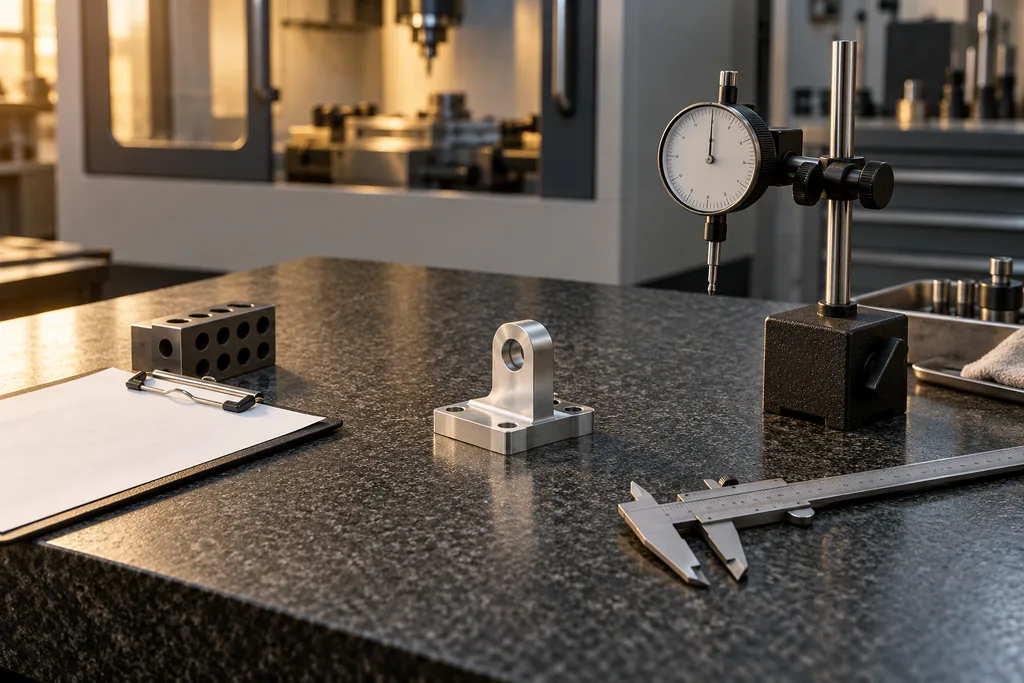
MATERIAL / GEOMETRY / EVIDENCE
Pocket access, internal corners and clamping references shape the machining discussion.
Bore, outside diameter and end-face relationships belong in a common datum strategy.
Coating, masking and edge condition need to stay connected to fit and inspection.
Align alloy and condition, then review wall geometry, mating surfaces and any coating allowance.
Identify the required grade, bore finish and edge condition. The sleeve example does not establish achieved performance.
Use a material review to discuss the application and evidence needed. Substitution requires engineering agreement.
Align revision, units, datums and intended assembly.
Discuss milling or turning, tool access and material condition.
Agree critical features and the evidence needed at sample review.
Record finish, packing and revision-control requirements.