01 / Revision alignment
Check that the 3D model and 2D drawing describe the same revision, units and feature intent.
Engineering edition 02
Explore the fictional company story, development roles and sample-review approach behind the collection.
Axiform Precision Studio — fictional
AXIFORM is an invented precision-machining studio built around a practical idea: the most useful conversation begins before a part reaches the machine. Its fictional founding team came from fixture design and prototype development, where a small ambiguity in a drawing could become a much larger question at assembly. The studio’s identity follows that experience: clear revisions, named datum surfaces and an agreed way to inspect the result.
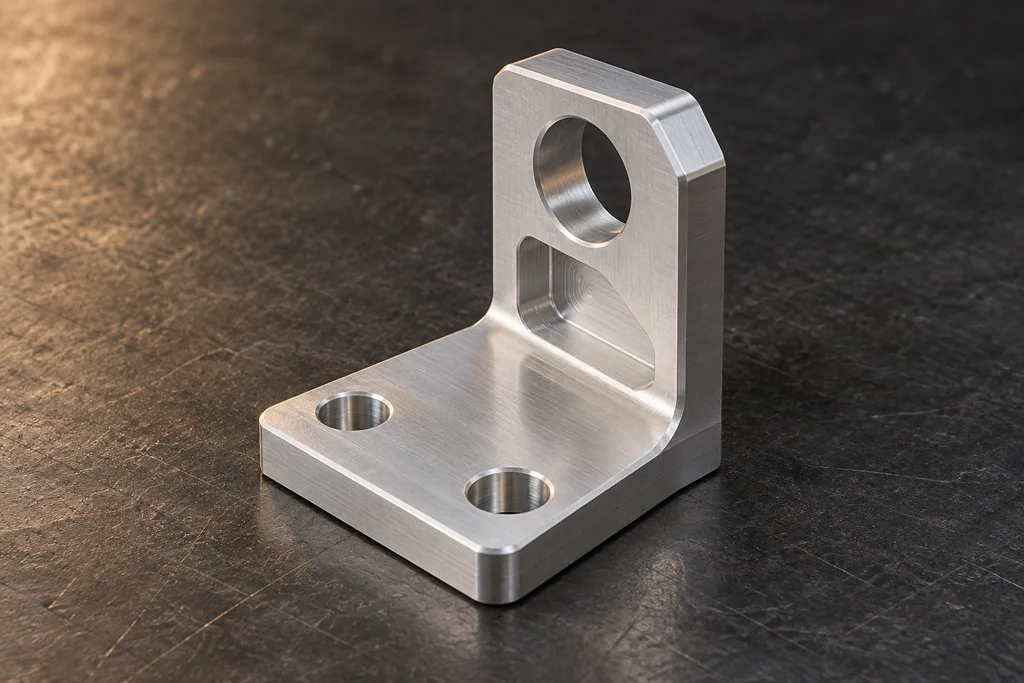
The workshop model joins three roles: engineering review, process planning and measurement coordination. A bracket may start with a stable base face; a sleeve may start with its bore and concentric features. These examples help explain why two parts made from the same alloy can need very different routes. Manufacturing discussions therefore follow geometry and use, rather than a promise of one universal tolerance.
For equipment builders and product-development teams, the buying path moves from a controlled drawing brief to material and finish review, then to a written inspection scope. The fictional sample program is organized around a first-part conversation and a revision-controlled handover. This site lets a buyer practice that brief locally while keeping real CAD data, personal contact details and commercial commitments outside the demonstration.
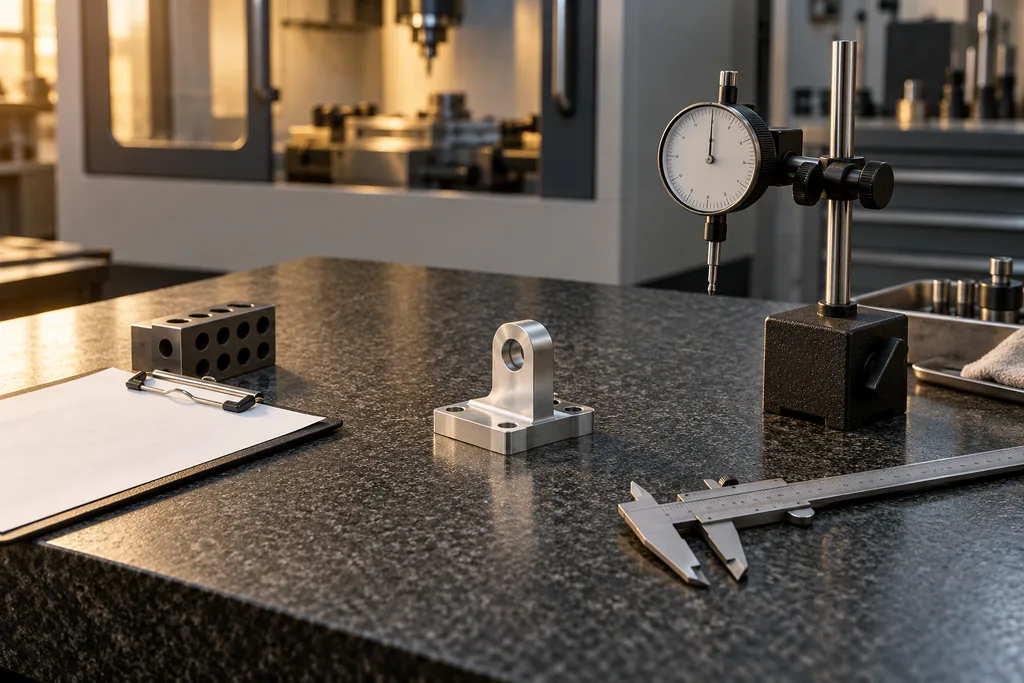
FROM INTENT TO HANDOVER
Align revision, units, datums and intended assembly.
Discuss milling or turning, tool access and material condition.
Agree critical features and the evidence needed at sample review.
Record finish, packing and revision-control requirements.
SAMPLE REVIEW / EVIDENCE SCOPE
Each checkpoint sets the reference and the question to resolve with an actual sample.
Check that the 3D model and 2D drawing describe the same revision, units and feature intent.
Separate locating surfaces and assembly features from general dimensions. Name the measurement reference.
Review edge breaks, burr access, masking areas and coating allowance before agreeing the route.
Define which dimensions, measurement methods and records belong in a sample review. Results require actual parts and evidence.
THE FICTIONAL DEVELOPMENT TEAM
Drawing revision, datum strategy and assembly questions.
Workholding, tool access, material condition and finish allowances.
Critical features, sampling scope and inspection-document requests.
FICTIONAL DEMO CONTACT DESK
Display-only fictional contact details. Use the local brief to explore this demonstration.