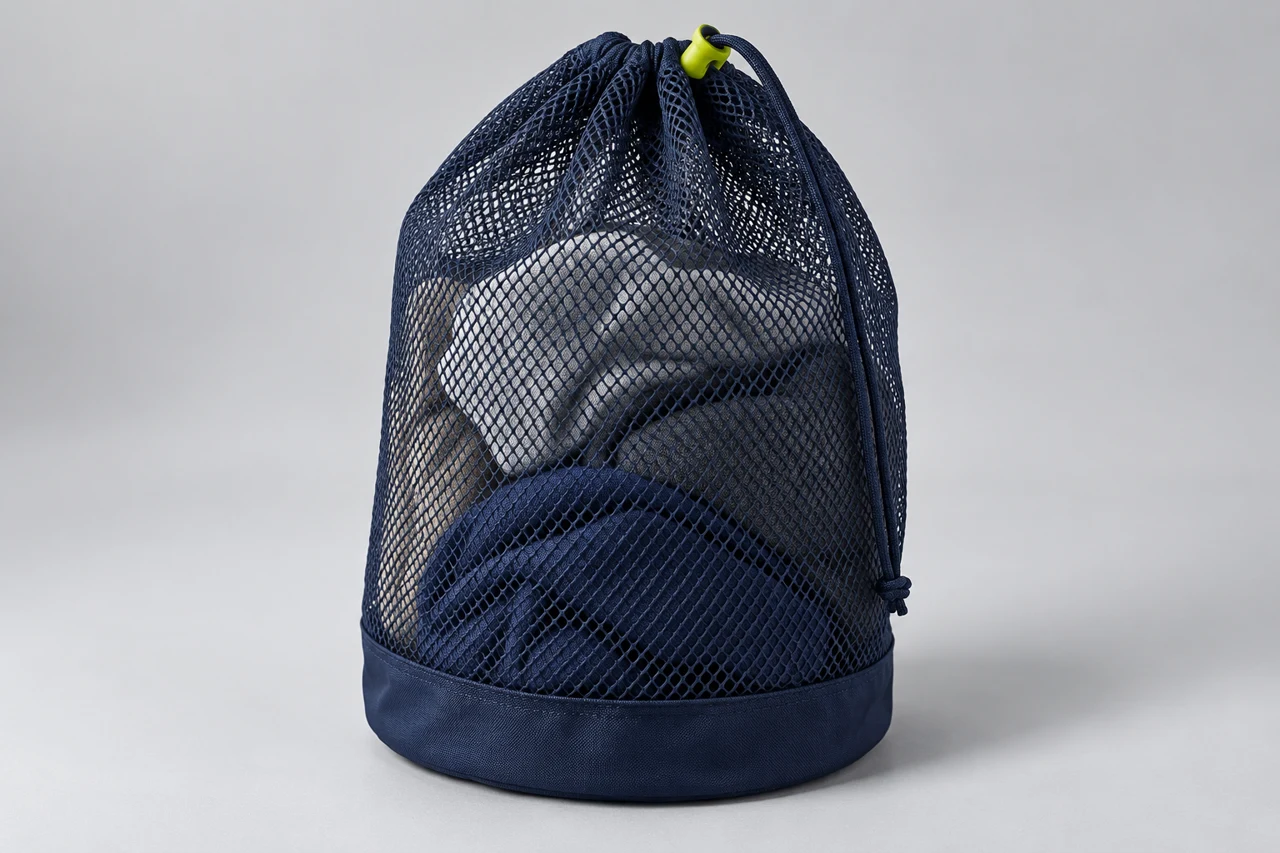
Mesh equipment sack
A mesh carry accessory for organizing lightweight, dry training softgoods. The open body makes the contents easier to see, while a solid base and a simple drawcord keep the construction brief easy to discuss.
A second container with a distinct job.
The SL–60 separates softgoods within the wider training kit. It can organize a color group or a batch of clean folded bibs before setup. Define the contents in the procurement brief rather than relying on the image. The illustrated sack contains neutral cloth bundles solely to show its form.
This is not a laundry-care claim, a drying system or a container for sharp, hot or heavy objects. Mesh does not make wet storage appropriate. The buyer must establish cleaning, drying and storage instructions for the confirmed materials.
Resolve the small construction decisions.
Mesh aperture, base fabric, drawcord path and cord-lock size all affect the sample. Ask for a detail photo and physical sample of the seam where mesh meets the solid base. Agree the seam allowance and reinforcement approach with the manufacturer before pricing a production version.
- Confirm finished height both open and gathered.
- Review cord length and closure details for the intended adult setting.
- Identify the contents and the expected handling routine in the sample brief.
Pack the sack as its own line item.
A shared kit can contain several sacks for equipment sorting. The worksheet uses one sack per twelve participants by default, with two for travel, purely as an editable composition model. It does not establish carrying capacity.
Maintain a separate SKU, color code and packing count even when the sack is supplied inside a duffel. That makes replacement ordering and incoming count checks less ambiguous. Ask the supplier to confirm a finished-goods specification and any required destination documentation.