Choose the construction.
Ask for the evidence.
A focused set of material and trim questions for finished sports softgoods. This page supports product development; it does not offer textile-mill sourcing or fabric certification.
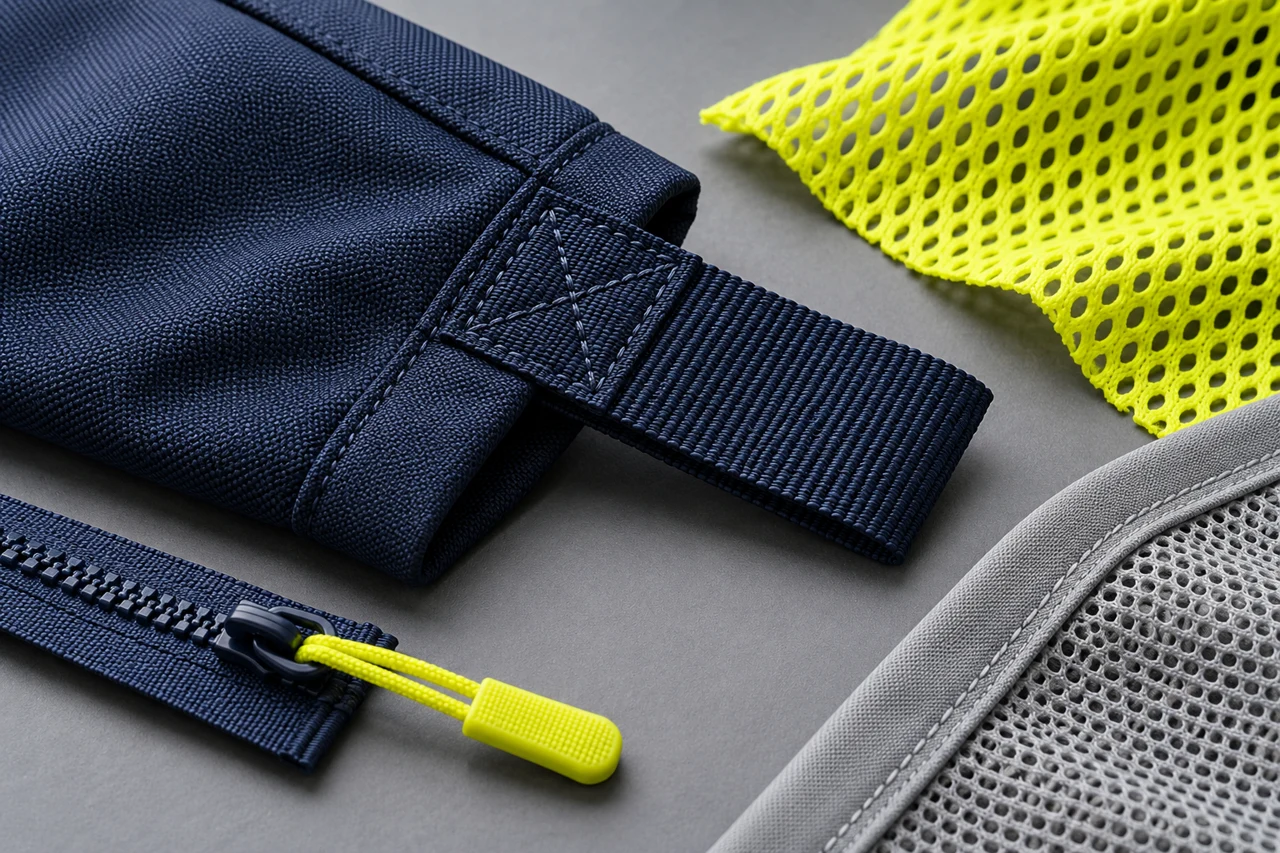
Original AI concept imagery. Materials, construction and dimensions require sample confirmation.
Woven shell: define more than denier.
The duffel concept offers 600D and 900D polyester shell directions. Denier is only one descriptor. A meaningful sample request also specifies fiber composition, weave, fabric mass, backing or coating, color reference and the expected hand-feel. None of those properties is verified by this demo.
Request a swatch and a sewn corner before choosing a final shell. Check folding behavior and visual compatibility with the trim. If a performance claim is needed, agree its test method, limit and evidence with a qualified supplier.
Mesh: review it as a finished item.
The bib and sack use different mesh constructions in the concept imagery. Do not assume they share a specification. Request mesh aperture, mass, composition and the proposed finishing method for each item. On a bib, examine binding and print stiffness. On a sack, examine the mesh-to-base seam and gathered closure.
Trims: small parts, separate approvals.
Confirm webbing width, zipper type, slider and cord-lock details in the product specification. Request an assembled sample because a trim can look correct on a parts card but behave differently after sewing. Document color matching expectations and replacement availability rather than assuming they are identical between batches.
- Shell / mesh reference and approved sample revision
- Thread, binding and seam construction drawing
- Trim codes and decoration restrictions
- Buyer-requested evidence and unresolved questions