01 / Finish set
Use chips and textile swatches to discuss appearance against an agreed physical reference. Record actual substrate, finish and textile identity, viewing conditions and revision. Screen colour does not authorize a production match.
SAMPLING / DECISION GUIDE
A sample is useful when its purpose is explicit. Separate a visual direction from a construction detail and a complete product review. None of these scopes establishes real availability, price or lead time.
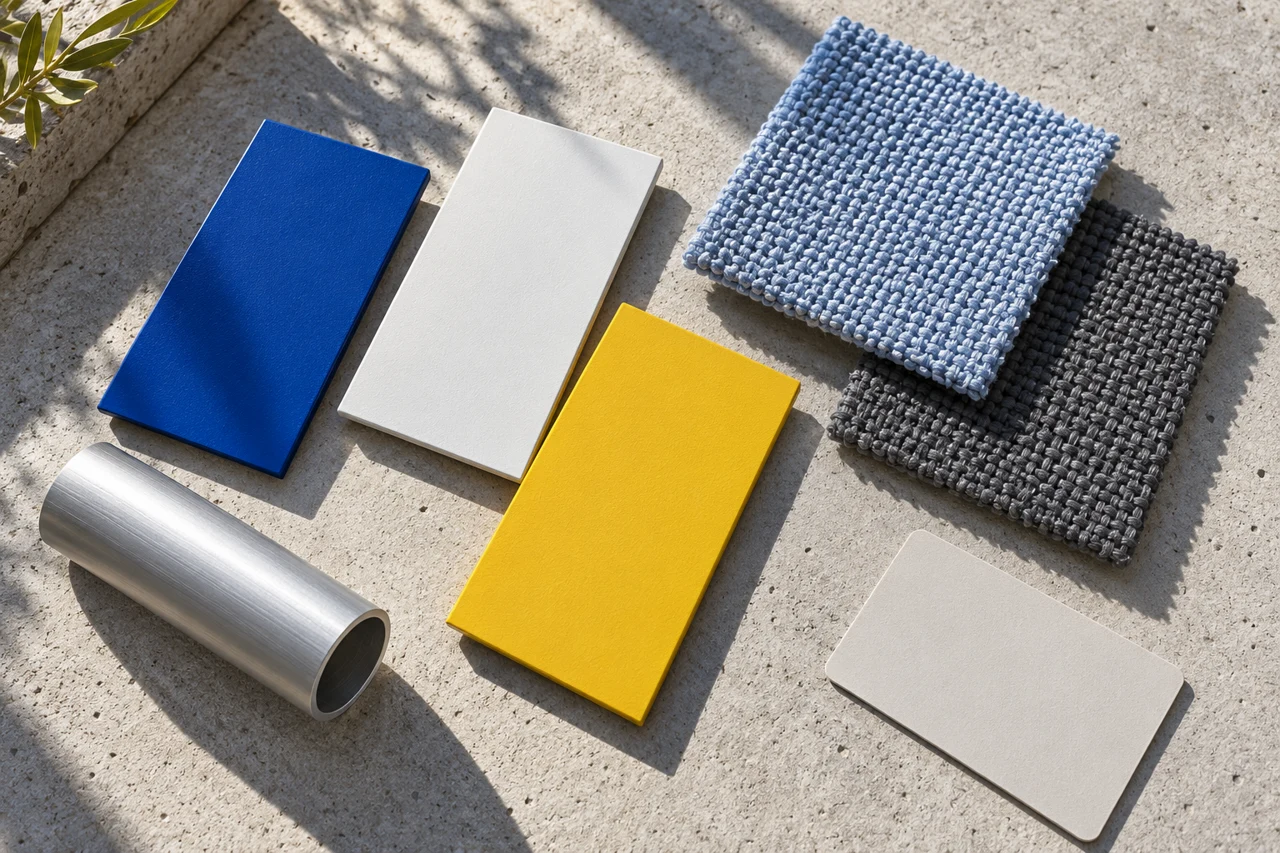
Use chips and textile swatches to discuss appearance against an agreed physical reference. Record actual substrate, finish and textile identity, viewing conditions and revision. Screen colour does not authorize a production match.
Add a representative frame or surface junction when the unresolved question lives at a bend, edge, fixing or material transition. Identify which real product and drawing revision it represents. A junction does not establish full-product performance.
Use the actual assembled product when reviewing geometry, pairing, component access or handling. Retain the sample ID and applicable instructions. Separate that review from any necessary product testing, market assessment or site approval.
SAMPLE CONTROL
A sample record should state what was reviewed, by whom, for which purpose and against which revision. If a material, finish or construction detail changes, identify the affected decision before carrying an earlier record forward.
In a real supplier workflow, agreed tolerances and approval authority would need to be explicit. This concept does not set tolerances or create an approval. Its local brief only captures the requested discussion scope.
Use separate records for visual appearance, physical pairing and the measured site. Combining them into one informal “approved” note can hide what remains unresolved.
Select a sample scope