DEMO — fictional range. Local brief only, NOT SENT. No personal data is collected or transmitted.
PROCESS
What the process decides, and what it cannot.
A machining process is chosen for the features it can hold rather than for the machines it names. Two shops with the same equipment produce different parts, because the setup is the variable.
- Turning
- Round features, bores and faces · decided by the chuck, the bar and the tool
- 3-axis milling
- Faces, pockets and patterns from one direction · decided by how the part is held
- 4- and 5-axis milling
- Features on several faces without re-clamping · decided by the fixture
- Drilling and tapping
- Holes and threads · decided by the datum the pattern is positioned from
- Grinding
- Where a tolerance is tighter than milling can hold reliably
- Deburring
- Always required, rarely drawn, and the step most often skipped
Why the setup decides the part
Every time a part is re-clamped, a new datum is introduced and the error between the two datums is added to the part. A design that needs three setups is a design with three chances to drift, and that is a drawing decision rather than a machine decision.
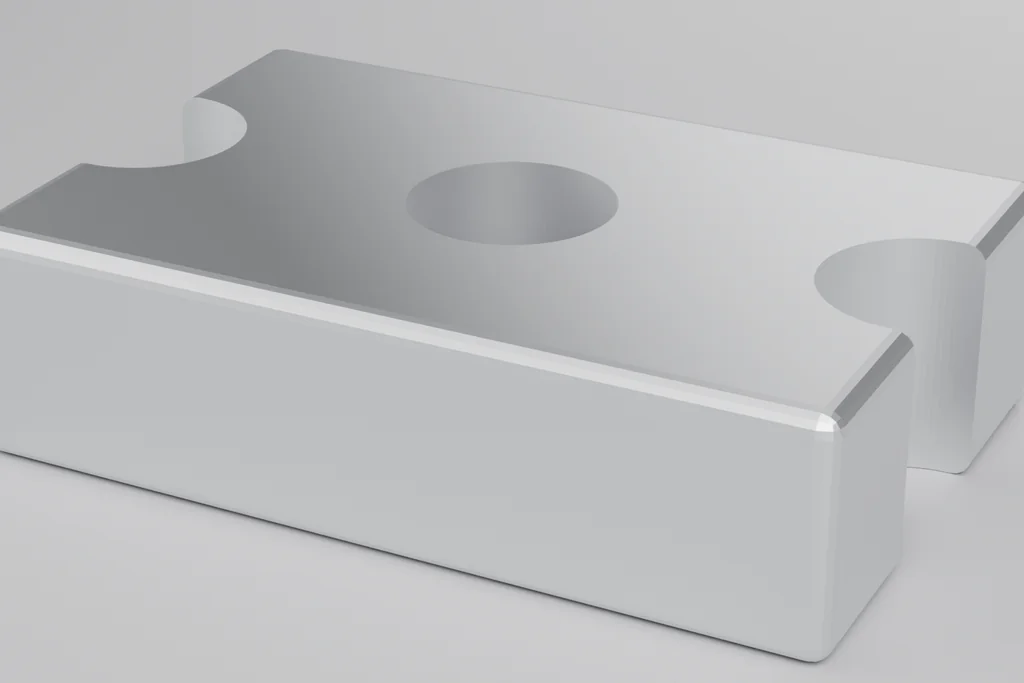
What a capability list cannot tell you.
Whether the shop can hold a tolerance on your part. A machine's published accuracy is measured in ideal conditions on a test piece; the question that matters is whether the process holds it on the actual geometry, in the actual batch.
The question worth asking instead.
Which feature will be hardest to hold, and how will it be measured. A supplier who can answer that has thought about the part rather than about the machine list.