A useful sample discussion includes both the product identity and the quantity level under review.
Choose whether the next question concerns the individual item, inner pack or outer case. State the item code and ask the provider which physical references and current documents are available for that discussion. A sample quantity and a commercial order quantity are separate topics; neither is offered by this fictional desk.
Record what arrived, its reference and the accompanying documents in your own project file. Compare the item description and actual pack counts rather than treating a demonstration calculation as a supplier commitment. If the sample or package revision changes, keep the earlier record and reopen the affected questions.
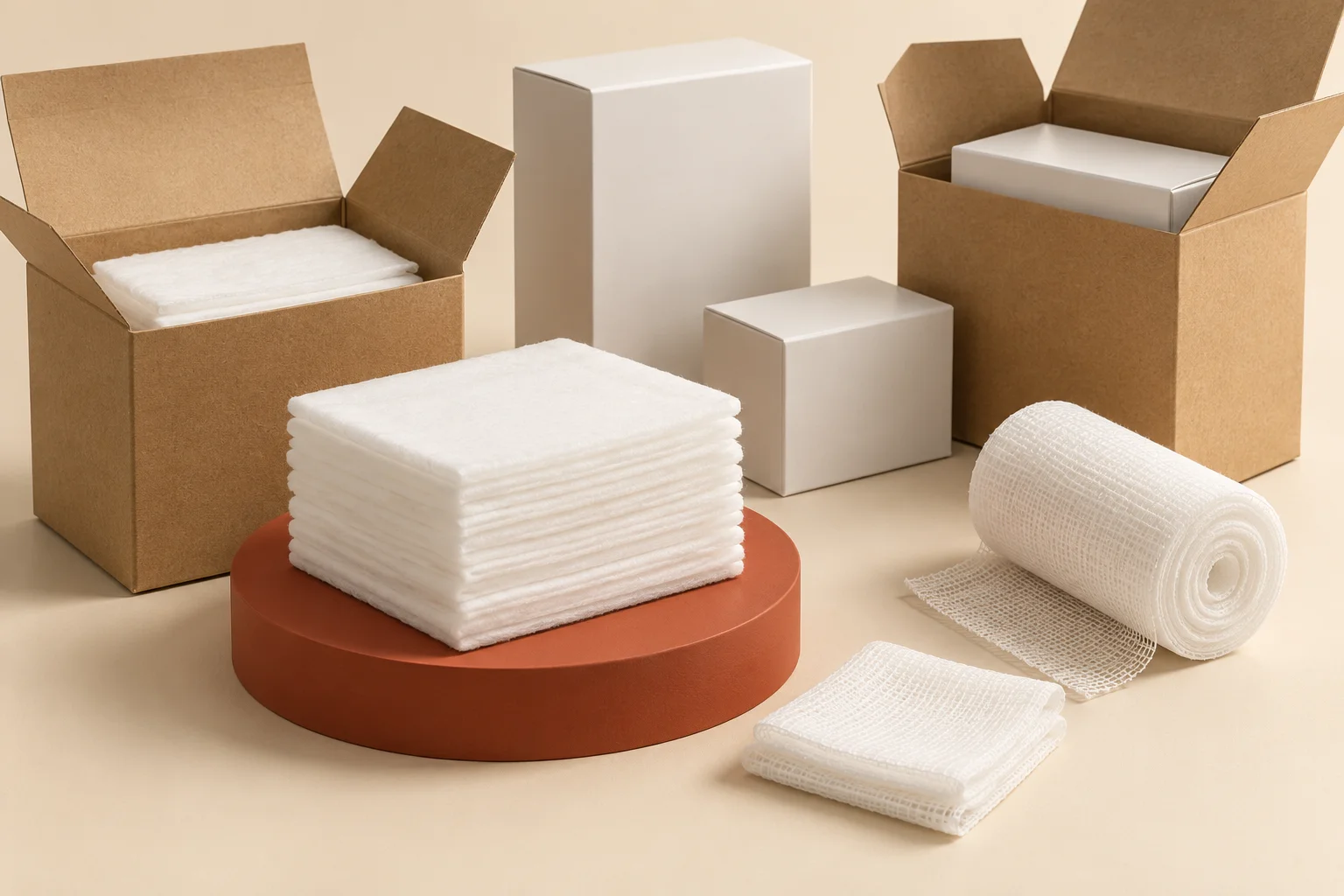
A thick white rectangular pad shown beside blank inner and outer packaging. It provides a clear item-to-case example for a distributor catalogue, with a deliberately small fictional pack model that can be inspected at each level.
Next question: How do the actual item code, inner-pack count and outer-case identity correspond in the provider catalogue?
A folded woven-square concept with an open blank paper-and-film reference. Its item dossier separates the appearance of a square from the actual supply form, package identity and quantity information a distributor needs.
Next question: Which folded item, supply form and package revision match the catalogue entry being discussed?
A dry woven roll with a short unfurled tail and a blank box. The catalogue shows how a visibly different item keeps its own code, pack model and next question, rather than inheriting the counts of a neighbouring product.
Next question: Which actual roll identity, inner box and case record belong together for this supply discussion?
A PRECISE NEXT DISCUSSION
Take the reference
with you.
Keep the object, pack or document question in a local record. It remains NOT SENT; no product, order, approval or clinical use is confirmed.