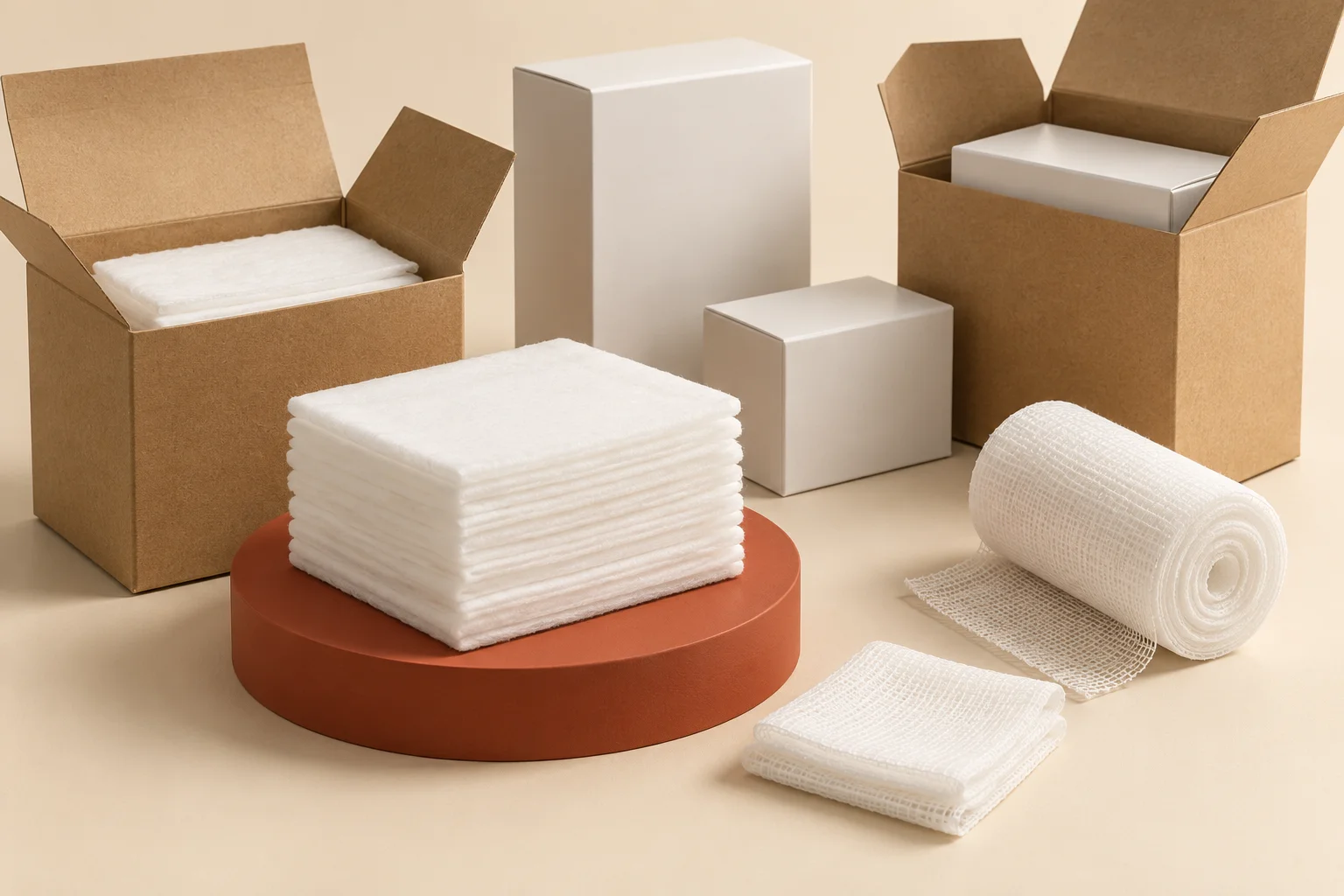
Follow a fictional item through an inner pack and an outer case without losing its identity.
The pad study uses five items per inner and eight inners per case. The folded-square study uses ten and six. The roll study uses four and twelve. These deliberately different examples make it possible to see why a quantity factor must stay with its own item rather than being copied across a catalogue.
Use the case desk to switch between the three levels and inspect a calculated total. It makes no stock reservation and supplies no packing validation, shelf life or clinical statement. Obtain the real hierarchy, labels and commercial terms from the actual provider before putting a quantity into an order.
A thick white rectangular pad shown beside blank inner and outer packaging. It provides a clear item-to-case example for a distributor catalogue, with a deliberately small fictional pack model that can be inspected at each level.
Next question: How do the actual item code, inner-pack count and outer-case identity correspond in the provider catalogue?
A folded woven-square concept with an open blank paper-and-film reference. Its item dossier separates the appearance of a square from the actual supply form, package identity and quantity information a distributor needs.
Next question: Which folded item, supply form and package revision match the catalogue entry being discussed?
A dry woven roll with a short unfurled tail and a blank box. The catalogue shows how a visibly different item keeps its own code, pack model and next question, rather than inheriting the counts of a neighbouring product.
Next question: Which actual roll identity, inner box and case record belong together for this supply discussion?
A PRECISE NEXT DISCUSSION
Take the reference
with you.
Keep the object, pack or document question in a local record. It remains NOT SENT; no product, order, approval or clinical use is confirmed.