FICTIONAL BRAND · DEMO MATERIALS · NO SUPPLIER OFFERTEXTILE STUDIES / 2026
SELVEN / STUDIO / 07

Interior designers and contract-furniture sourcing teams

One material, different furniture questions.

A loose seat, a curved back and a flat wall panel expose a textile to different joins and installation conditions. Define the actual assembly before deciding which sample evidence is relevant. These examples are development scenarios, not approved uses.

Turn the reference into a question.

A loose seat, a curved back and a flat wall panel expose a textile to different joins and installation conditions. Define the actual assembly before deciding which sample evidence is relevant. These examples are development scenarios, not approved uses.

Map the visible face, seam positions and neighbouring finishes. For a coordinated room, keep the sample identifier against each item rather than treating a single palette photograph as approval for every surface.

室内面料选样工作室 — original AI concept
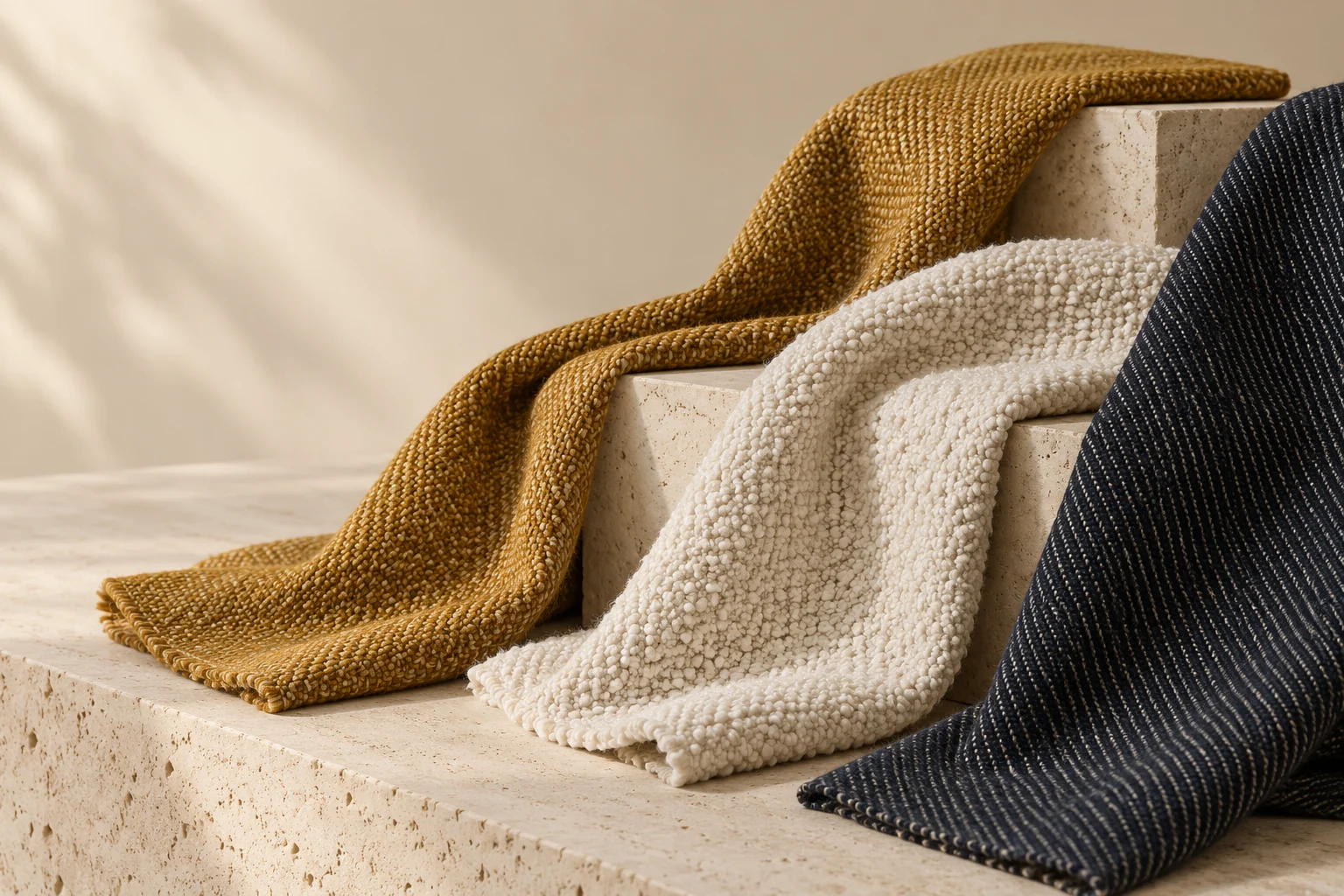
Original AI concept image · not an actual product photograph. Open the image for a closer look.

Use an identified physical sample and the intended assembly to review the questions. AI imagery and demonstration values cannot serve as verified product evidence.

Ask the material-specific question.

A family label is only the starting point. Follow the product dossier for context and document needs.

01 / SV / 01

Ochre Basket

Does the larger weave remain visually consistent across adjacent upholstered sections? Check the visual scale against the size of the furniture panel. Review yarn movement at seams and the appearance of wrapped corners on a physical mock-up.

02 / SV / 02

Chalk Loop

Which exposed edges and joins need a second physical sample review? Inspect how the loop surface meets piping, joins and curved edges. Include an actual seam and the intended padding when reviewing a furniture sample.

03 / SV / 03

Ink Diagonal

Where must the diagonal direction remain continuous across the finished assembly? Set the direction of the diagonal before planning adjoining parts. A rotated piece may read as a different tone even when it comes from the same conceptual palette.

KEEP THE REFERENCE USEFUL

What travels with the sample?

Identify the material code, physical sample, finish, drawing and review date. Keep colour and appearance comments tied to that reference so a revised piece does not silently replace an earlier decision.

Ask the real supplier to confirm composition, agreed specification, relevant evidence and commercial terms. A saved demonstration record is a conversation aid, not a purchase approval.

Open the working documents ↗

THREE SPECIFIC NEXT QUESTIONS

Ochre Basket
Does the larger weave remain visually consistent across adjacent upholstered sections?

Chalk Loop
Which exposed edges and joins need a second physical sample review?

Ink Diagonal
Where must the diagonal direction remain continuous across the finished assembly?

A CLEARER NEXT DISCUSSION

Take the material questions with you.

Prepare a local sample brief with the concept and review context. It stays NOT SENT; no supplier approval or reservation is created.

Save a sample brief ↗