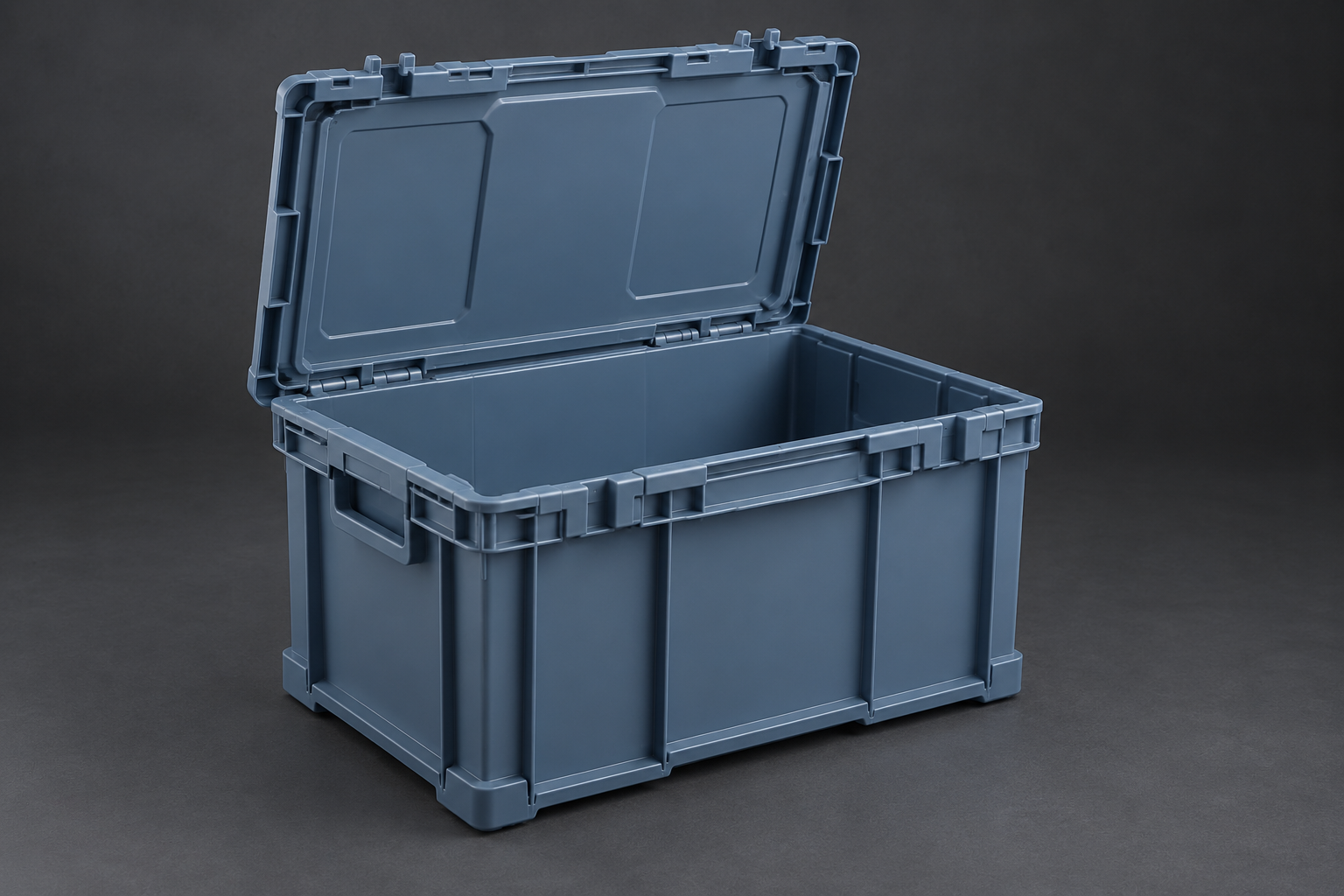
Existing original AI concept from the accepted LOOPSTACK source. Not a factory photograph, test or supplier evidence.These are separate records for a sourcing conversation. Linking them does not certify handling, cleaning or route suitability.
Three interfaces. Three separate questions.
Interface
What the buyer provides
What remains to verify
Part to container
Controlled part drawing, orientation and the intended contact faces.
Physical clearance, protection strategy and any allowed movement under the actual route.
Container to operator
Opening direction, access sequence and the workstation layout.
Reach, removal sequence and local handling requirements. A catalog rendering is insufficient.
Container to equipment
Actual trolley, rack or pallet interface and its reference drawing.
Support points and the equipment owner’s review. No safe load is established by this demo.
Prepare an interface review.
RECORD 01
Keep one reference per interface
Use the part reference for the content and a separate equipment reference for the support. Do not reuse a product label as if it describes the entire installation.
Mark the drawing revision and the person who owns it. A later change should reopen the affected review, rather than silently carrying over an old decision.
RECORD 02
Record the opening sequence
Explain whether the operator lifts a lid, slides a tray or removes a divider. Include the direction and the intended access face in a small sketch.
Use a physical sample to record what actually happens. The fictional tote image illustrates the topic without representing an approved ergonomic arrangement.
RECORD 03
Describe a mismatch
If an opening, support or orientation is unresolved, keep the question visible. Record the observed issue and the evidence that would support a decision.
Do not replace a missing measurement with an invented tolerance. The accepted product pages retain their sample dimensions and concept-only boundary.
Continue with an empty-unit plan.
The workstation review addresses the forward handover. The empty route needs its own orientation, storage and ownership record.