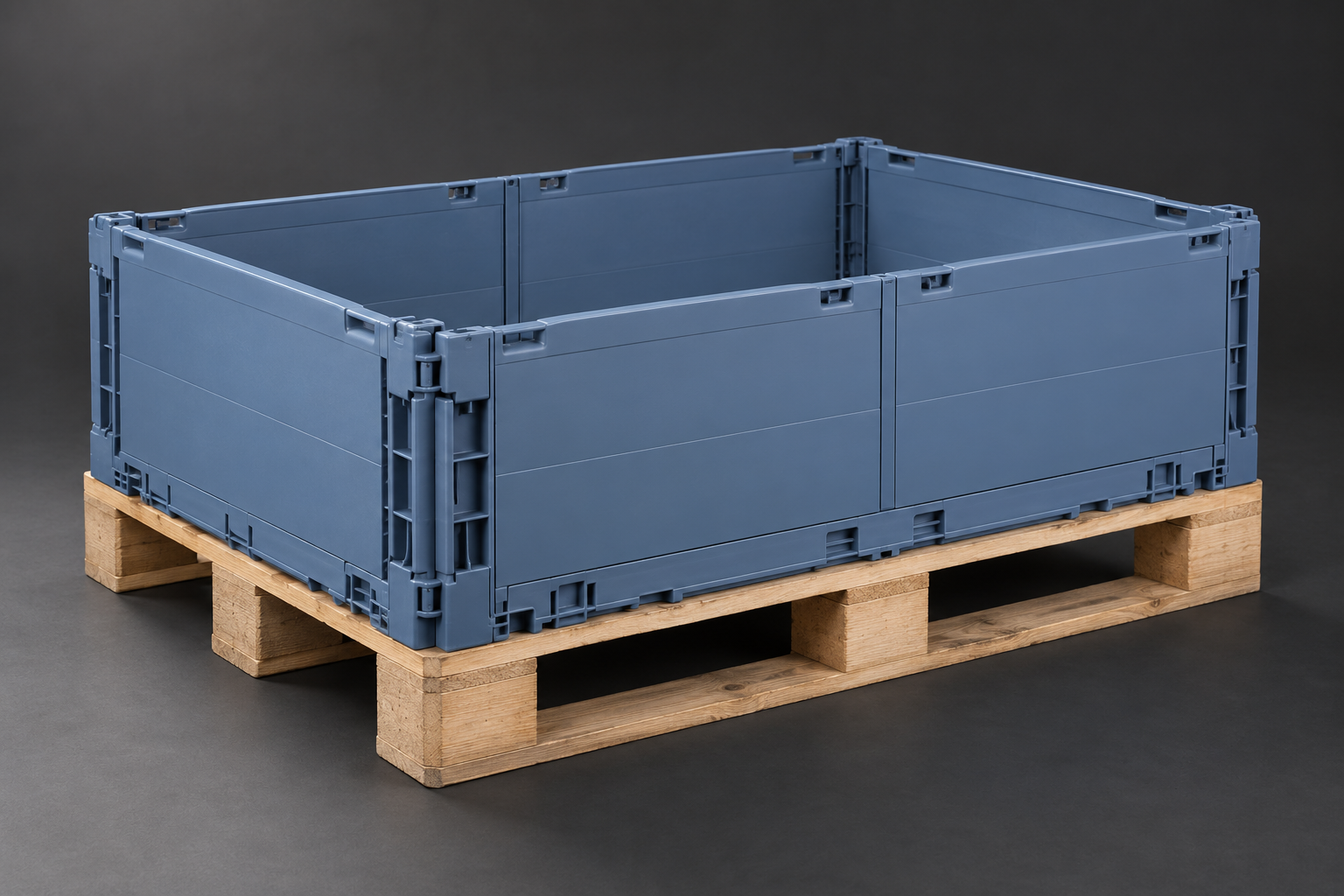
Existing original AI concept from the accepted LOOPSTACK source. Not a factory photograph, test or supplier evidence.These are separate records for a sourcing conversation. Linking them does not certify handling, cleaning or route suitability.
Record what returns.
RECORD 01
Orientation
Sketch the proposed empty arrangement: unfolded, folded, nested or separate components. List anything that must stay with the unit, such as lids or dividers.
A visual choice does not imply stackability, return capacity or compatibility with another unit. Those points require the actual configuration and a reviewed sample.
RECORD 02
Collection
Identify where the receiving team places the empty unit and who records it. Keep collection location and handover time separate from any delivery promise.
If several stations share a pool, record the intended identification method and the unresolved counting question. This page does not connect to a stock or transport system.
RECORD 03
Ownership
Name the party responsible for inspection, cleaning, missing components and return authorization. Make the exception path visible before the first trial.
An ownership note is a discussion record. It is not a contract, a supplier commitment or permission to place damaged units back into use.
Do not turn a shape into a saving.
Proposed statement
Needed evidence
Safe wording while open
The collar folds for return.
Physical sample, orientation record and checked component identity.
Folding concept for sample review.
Empty units use less space.
Measured arrangement, boundaries and the compared configuration.
Empty orientation to be measured.
A route is suitable for reuse.
Actual handling conditions, condition records and responsible approval.
Proposed return route; suitability unconfirmed.
Track condition before another cycle.
Keep dirty, damaged and unidentified units out of a proposed reuse decision until the responsible owner has recorded the next action.