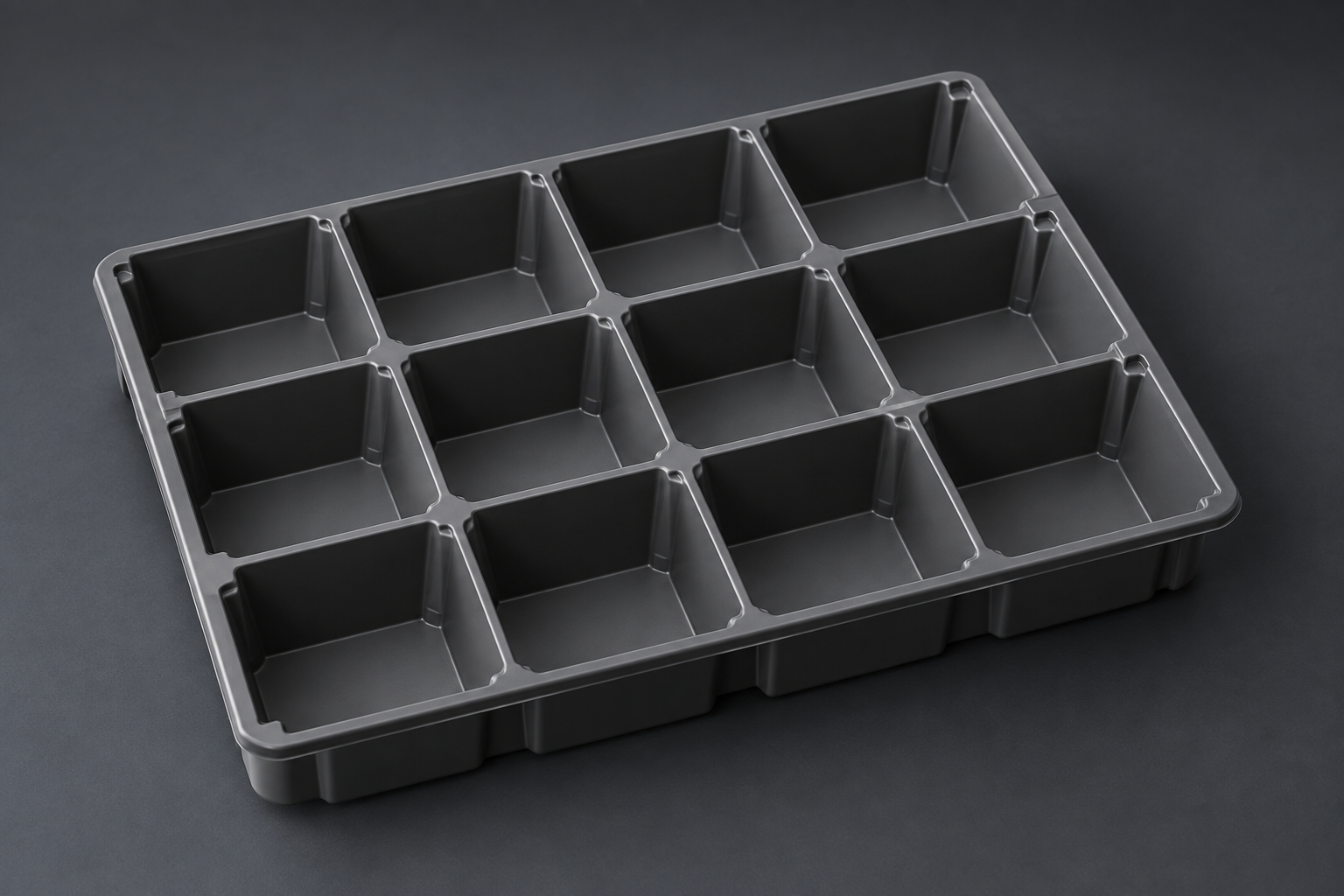
A clear condition record helps separate an observation from a reuse decision. Cleaning instructions must come from the actual controlled product information.
Existing original AI concept from the accepted LOOPSTACK source. Not a factory photograph, test or supplier evidence.These are separate records for a sourcing conversation. Linking them does not certify handling, cleaning or route suitability.
A useful log keeps decisions traceable.
Field
Record
Boundary
Unit identity
Product/reference, configuration and observed date.
An unidentified unit remains an open item.
Observation
Visible issue and a linked photograph with context.
A photo does not establish contamination or material compatibility.
Action
Isolation or other action chosen by the responsible owner.
No release or cleaning approval is produced here.
Review basis
Controlled instruction, sample record and named reviewer.
Do not invent cleaning chemicals, temperatures or cycle limits.
Keep instructions separate from the log.
RECORD 01
Use controlled instructions
A condition log records what was seen and which action was taken. It should point to the actual instruction rather than quietly becoming a replacement for it.
Materials, contact requirements and the real use environment can change what is suitable. This fictional template supplies no validated cleaning procedure.
RECORD 02
Preserve the observation
Keep the original image and the unit reference together. Label a later annotation or follow-up as a new record so the first observation remains readable.
If the cause is unknown, say so. A scratch or stain in a photograph should not be promoted to a diagnosis, a test result or a supplier responsibility claim.
RECORD 03
Assign the next decision
Record the owner of the question and the evidence requested. Treat a missing reviewer or a changed configuration as an unresolved part of the sample review.
The demo CSV is blank. Downloading or completing it does not grant permission to clean, repair or return a unit to service.
Prepare a controlled sample conversation.
Use condition questions alongside route, workstation and empty-return notes. The sample review brings their reference versions together without declaring a pass.