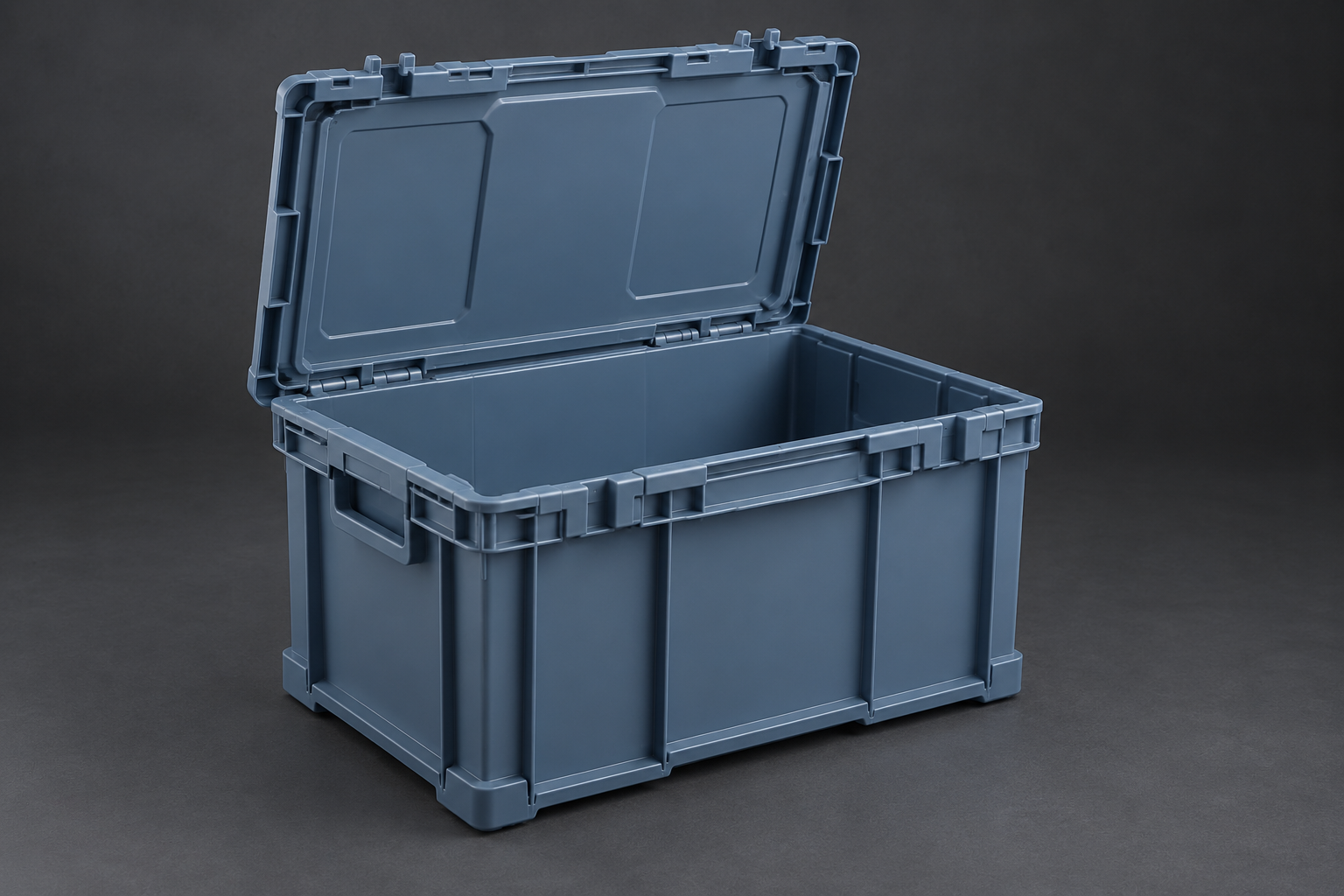
Existing original AI concept from the accepted LOOPSTACK source. Not a factory photograph, test or supplier evidence.
Before the sample conversation.
RECORD 01
Confirm identity
Record the concept selected, the real proposed product reference and any lid, divider or collar configuration. Keep an illustrative catalog image distinct from the actual supplied sample.
Include the part drawing, workstation reference and route record versions. A sample decision without those versions is hard to revisit after a change.
RECORD 02
Write the questions
Separate clearance, access, condition and empty-return questions. For each one, list the observation needed and who can review it.
Do not prefill a passing result or invent a threshold. The responsible teams need to supply real acceptance criteria suitable for the actual use context.
RECORD 03
Record the outcome
Mark each observation as recorded, incomplete or needing another review. Keep the reviewer, date and evidence reference beside the conclusion.
If the proposed configuration changes, revisit the affected question. This website produces neither a quotation nor an engineering, transport or cleaning approval.
A sample review has stages, not guaranteed dates.
Stage
Useful input
Next decision
Scope
Configuration, controlled references and open questions.
Is the review basis complete enough to discuss?
Observation
Actual sample and agreed observations.
Which observations are recorded or still missing?
Review
Evidence references and the responsible reviewer.
Continue, revise, or request further evidence.
Change
A new reference, configuration or route condition.
Reopen the affected part of the review.
Create the discussion checklist.
The document center lets you choose the records for a local checklist. Real supplier files and approvals must be obtained through the actual project process.