DEMO-FR-03 / Hopper-and-tube record
Seed Drill
Trace the relationship between hopper appearance and the proposed assembly source.
INDEPENDENT PRODUCT RECORD
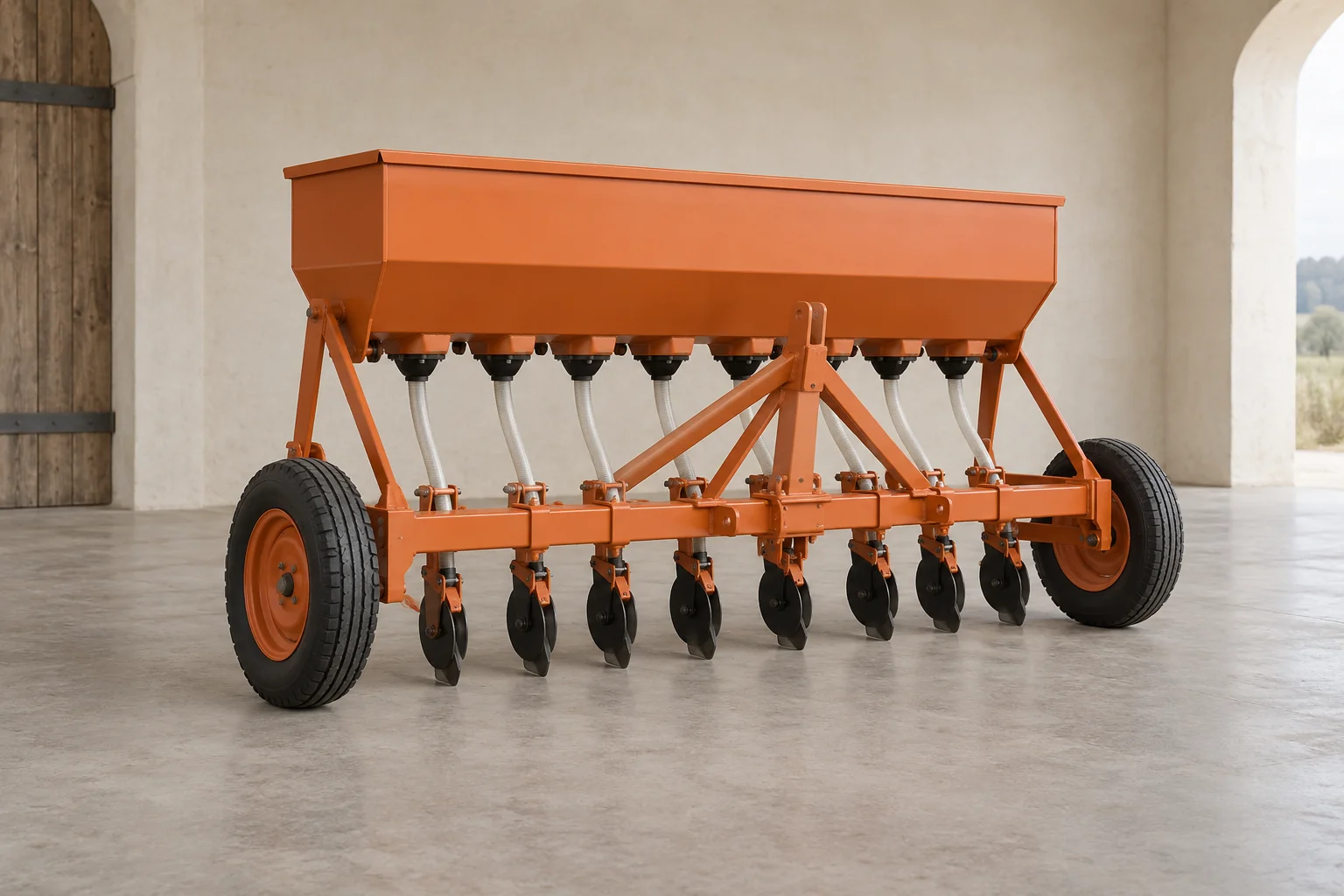
Seed Drill presents a hopper, several tube appearances and a lower disc arrangement as one fictional visual concept. It is a recognizable starting point for a catalogue discussion. The image does not specify a metering method, seed type, row arrangement or planting capability; those attributes remain outside the appearance record.
Name the actual proposed assembly and ask which current source represents its supplied components. Keep a field-description reference and a seasonal question separate from the assembly drawing. Where a specimen represents only a hopper or tube, record that limited correspondence rather than calling it a complete machine sample.
Use sample notes to define what a real specimen is intended to represent, and season reference to label the date and scope of a discussion. The atlas retains the selected identity through both views. It supplies no planting instructions or capacity calculation; the next step is a clear request for the missing provider sources.
The unresolved question
Which current assembly source identifies the hopper, tubes and represented proposal?
Discuss this identityRecord scope
| Visible form | Hopper-and-tube concept |
|---|---|
| Assembly identity | Provider reference required |
| Specimen scope | Must be named |
| Metering and capability | Not specified |
Before the next conversation
- Separate assembly from an individual specimen.
- Record seasonal context without a delivery promise.
- Keep the requested source with the open question.
A fictional DEMO code is an identity in this website study, not a real supplier SKU. The image and abstract geometry supply no measured attributes. The actual provider must identify the proposed item and current sources.
Download the blank Seed Drill source note