DEMO-FR-01 / Tine-frame record
Row Cultivator
Locate a tine-frame identity before describing its field context.
INDEPENDENT PRODUCT RECORD
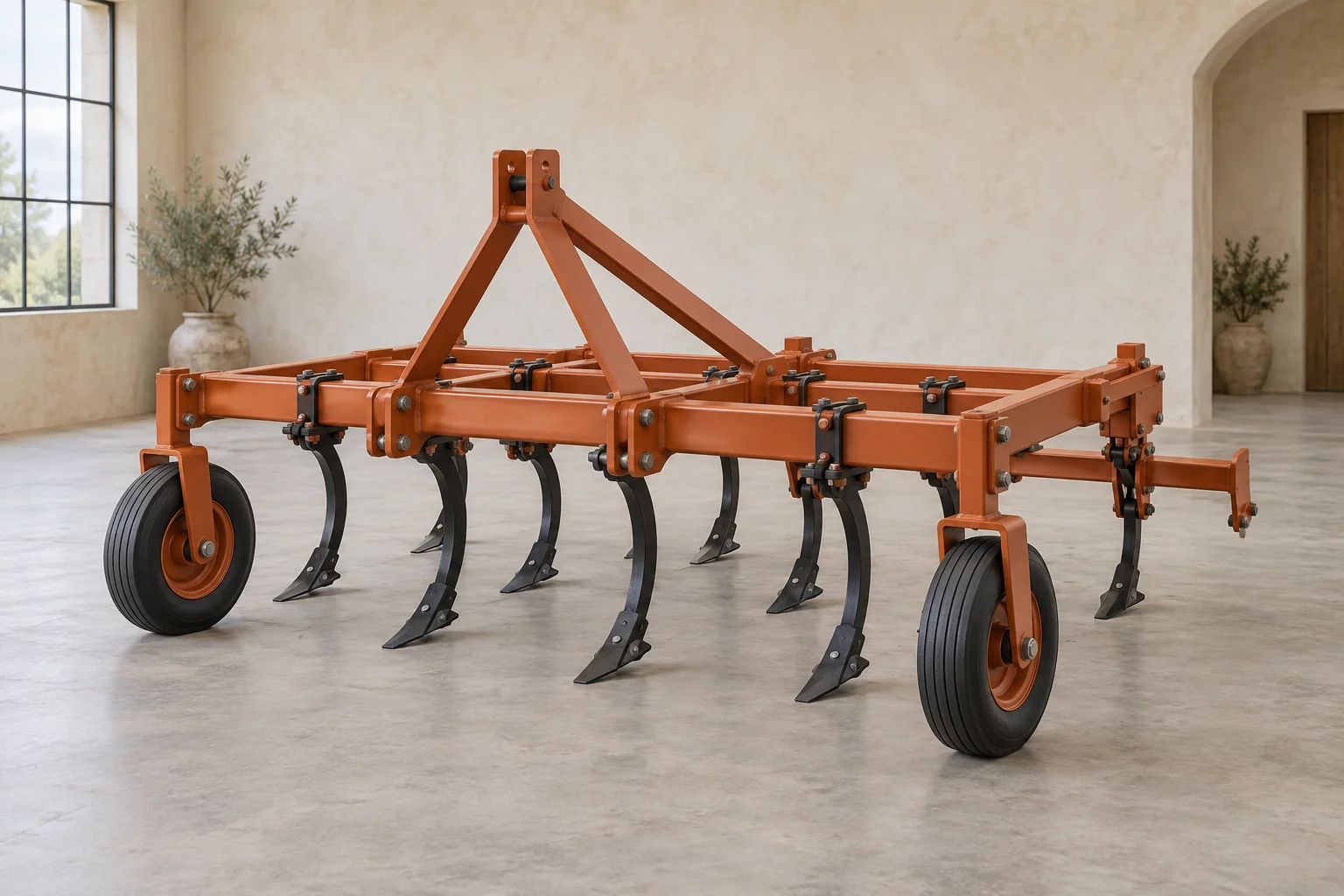
This record begins with a visible frame, curved tine appearances and two outer wheels. Those elements make the row-cultivator concept easy to distinguish from the disc and hopper forms elsewhere in this atlas. A photograph-like illustration supplies a visual vocabulary; it does not establish row spacing, working width, adjustment range or an operating arrangement.
Ask the provider to name the actual frame and its current drawing issue. Keep the relevant field description in a separate reference, including who recorded it and what question it represents. A proposed tine change should be identified as a different member or issue rather than silently remaining part of the original frame description.
Open the field atlas to retain this identity while moving from the object window to context notes. The reveal connects reading material, not machine motion. The counterpart and sample chapters help prepare the next questions: which source belongs to the proposed frame, and how does a real specimen relate to it?
The unresolved question
Which proposed frame and current source correspond to the recorded field-context question?
Discuss this identityRecord scope
| Visible form | Tine-frame concept |
|---|---|
| Object source | Provider drawing required |
| Field context | Separate dated reference |
| Working geometry | Not specified |
Before the next conversation
- Record frame and member identity separately.
- Keep field context with its own author and date.
- Ask how the proposed specimen matches the issue.
A fictional DEMO code is an identity in this website study, not a real supplier SKU. The image and abstract geometry supply no measured attributes. The actual provider must identify the proposed item and current sources.
Download the blank Row Cultivator source note