DEMO-FR-02 / Disc-frame record
Disc Harrow
Separate disc-frame appearance from the source describing its proposal.
INDEPENDENT PRODUCT RECORD
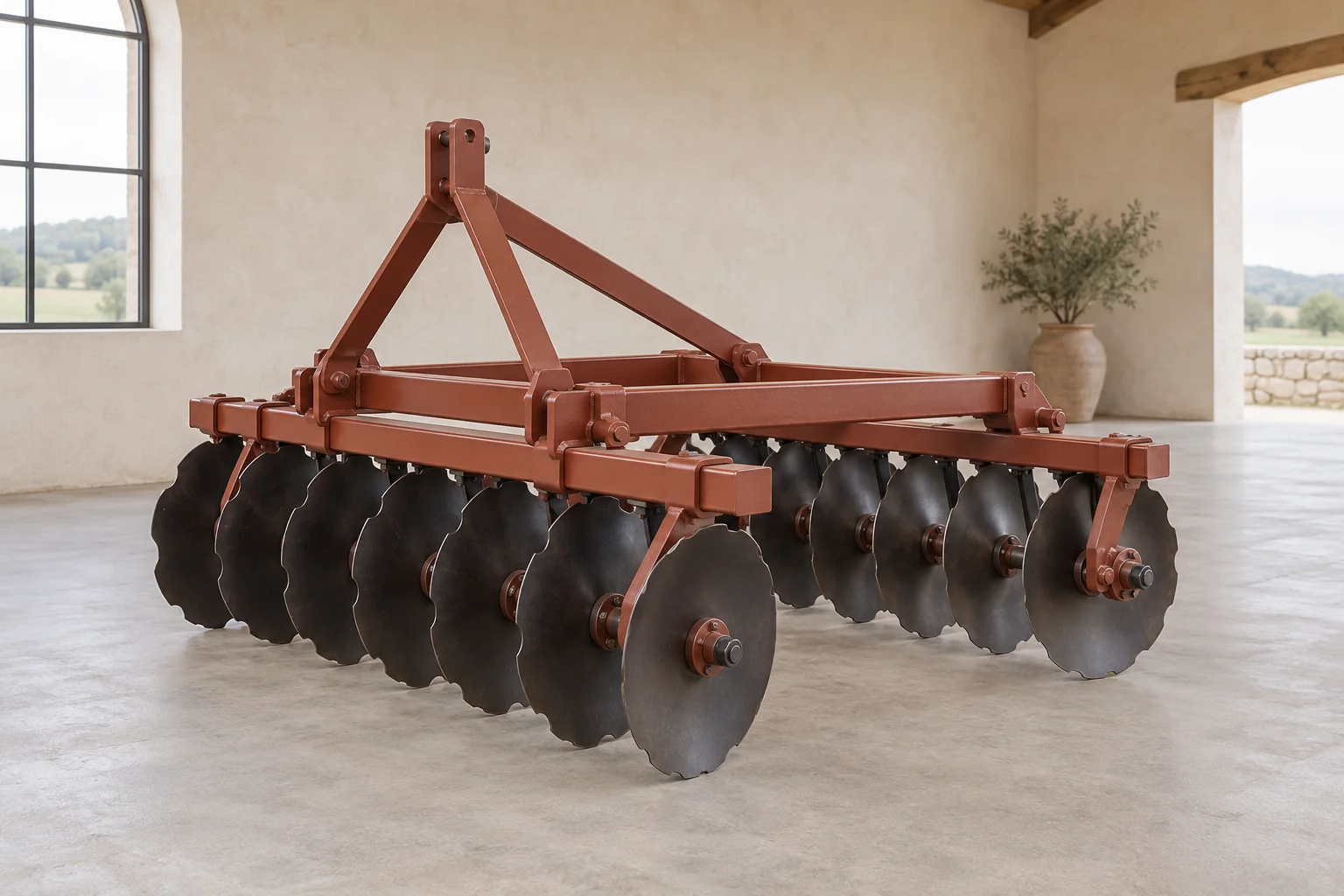
Disc Harrow uses repeated concave forms to create a different visual rhythm from the tine frame. Its empty, unattached appearance keeps attention on the object identity. Disc count in the image, apparent diameter and frame angle are illustrative details rather than a delivered configuration or working specification.
Request an assembly reference for the actual proposal and ask which member records belong to that issue. A field-context note should identify its subject instead of claiming a result from a similar-looking disc arrangement. Keep any physical sample and its document correspondence separate; a single member specimen cannot establish the whole proposed assembly.
Read implement identity and source handoff before preparing a comparison with the other dossiers. Their placement in one collection does not establish substitutes or a shared task. The context spread helps keep each object name beside its open question, so a later reader can distinguish a requested reference from an assumed answer.
The unresolved question
Which issue identifies the proposed disc assembly and the field-context scope under discussion?
Discuss this identityRecord scope
| Visible form | Disc assembly concept |
|---|---|
| Assembly issue | Current source required |
| Member correspondence | Open question |
| Application result | Not established |
Before the next conversation
- Ask for an assembly reference, not just a picture.
- Name the scope of a member sample.
- Retain the previous issue when the proposal changes.
A fictional DEMO code is an identity in this website study, not a real supplier SKU. The image and abstract geometry supply no measured attributes. The actual provider must identify the proposed item and current sources.
Download the blank Disc Harrow source note