Application coordinator
Clarifies buyer role, intended site, supply scope and operating objective.
APPLICATION / COMPONENT / INTERFACE
The fictional company story, application and interface roles, and document-review approach behind HELIOGRID.
Heliogrid System Interface Studio — fictional DEMO company
HELIOGRID is an original fictional technical-supply studio imagined in 2021 around the boundary between a component enquiry and a complete energy system. Its starting point is the application and the buyer’s role. An EPC, developer and distributor can ask about the same module or storage enclosure while owning very different parts of the project. The studio keeps those responsibilities visible instead of treating a nameplate value as a ready-to-install solution.
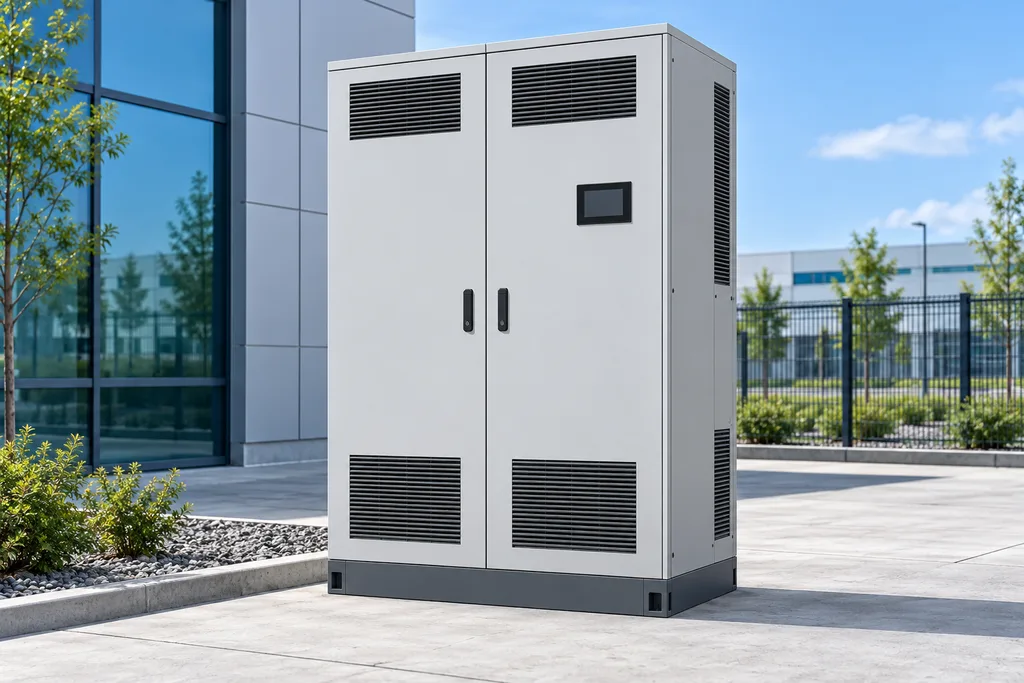
The collection contains three illustrative component studies: a photovoltaic module, a commercial storage cabinet and a rack storage module. The application coordinator records the intended site and operating objective. The interface reviewer organizes the electrical, control and mechanical questions that must be answered by the actual selected products. The document coordinator keeps the component references, revision status and requested evidence together. These are fictional roles, not claims about an engineering license, factory, test laboratory or existing customer portfolio.
A real system needs actual product characteristics, compatible interfaces and project-specific installation review. Module data, inverter or PCS requirements, BMS and EMS interfaces, protection, grid conditions and commissioning responsibilities cannot be inferred from an image or an energy label. This demo therefore provides a scope map and a local RFQ practice tool rather than automated sizing, component approval or financial analysis. Example power and energy values remain separate, all compatibility remains unverified, and the fictional site imagery represents no real installation. No certification, grid-compliance conclusion, yield forecast, savings or return-on-investment figure is supplied.
THE FICTIONAL DEVELOPMENT ROLES
Clarifies buyer role, intended site, supply scope and operating objective.
Organizes actual module, inverter / PCS, BMS / EMS and installation-document questions.
Keeps component references, revisions, requested evidence and acceptance responsibilities aligned.
REFERENCE CONTROL / EVIDENCE TO REQUEST
Match the actual product, revision and evidence before discussing integration.
Request real voltage/current limits and protocol references; no compatibility is verified here.
Define mounting, access, environment and project engineering responsibilities.
Request applicable documents and commissioning references; no approval or compliance result is supplied.
Record site, buyer role, operating objective and supply boundary.
Identify the components under discussion without assuming compatibility.
Request actual electrical, control, mechanical and installation documents.
Agree engineering ownership and commissioning scope with the real project team.
FICTIONAL DEMO CONTACT DESK
Display-only fictional details. No communication is sent to these contacts.